

Last Reviewed by Dr. Sarah Mitchell, DVM May 2026
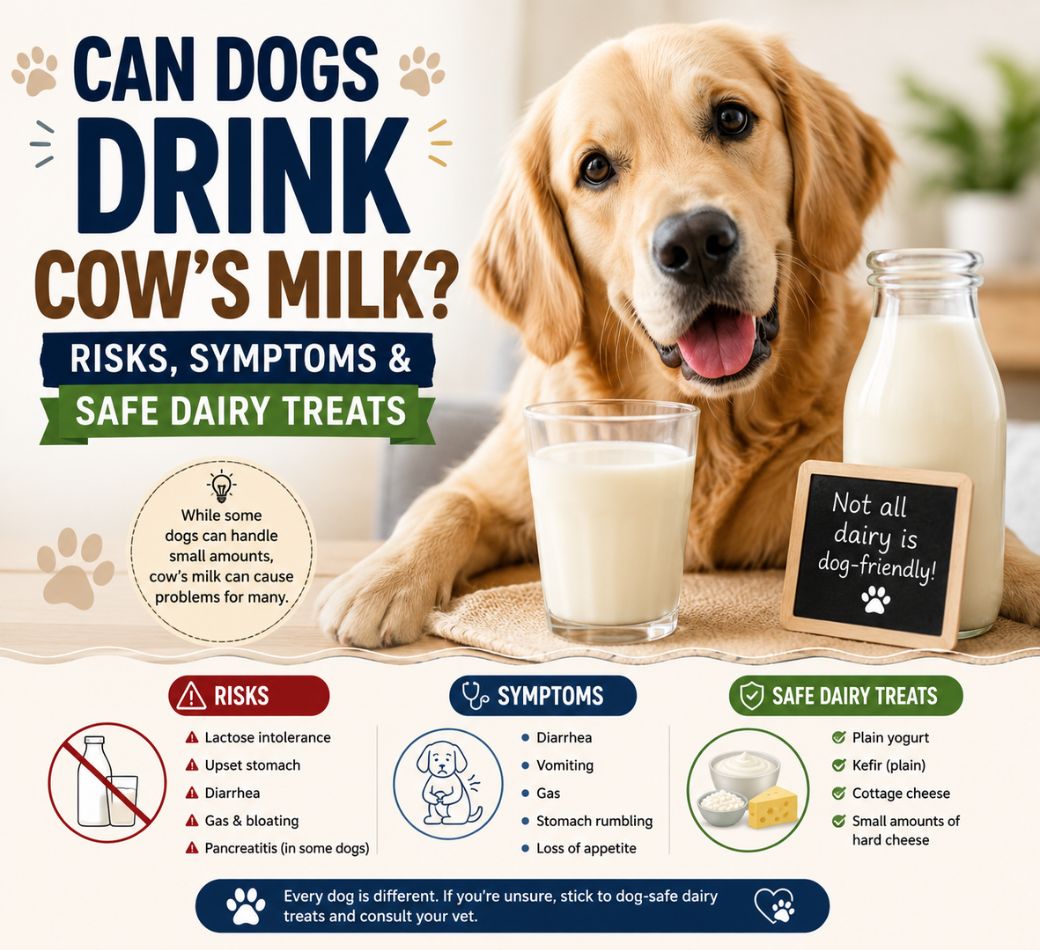
Dogs often beg for milk, ice cream, or creamy treats, but many pet owners still ask one important question: can dogs drink cow’s milk safely? The answer depends on your dog’s age, digestive health, and ability to process lactose.
Many dogs develop lactose intolerance after puppyhood because their bodies produce less lactase enzyme over time. When dogs cannot digest lactose properly, dairy products may trigger digestive upset, gas, diarrhea, or vomiting.
This guide explains lactose intolerance in dogs symptoms, safe dairy treats for dogs, dog-safe milk alternatives, and how to test dairy tolerance safely at home.
About the Author
Dr. Sarah Mitchell, DVM
Dr. Sarah Mitchell is a veterinarian with over 12 years of clinical experience specializing in canine gastroenterology. She has treated hundreds of cases involving diet-related digestive distress and food sensitivities in dogs. Dr. Mitchell combines evidence-based veterinary nutrition with practical feeding strategies for pet owners. She also volunteers with regional rescue organizations and advocates for balanced, species-appropriate canine diets.
Can Dogs Drink Cow’s Milk?
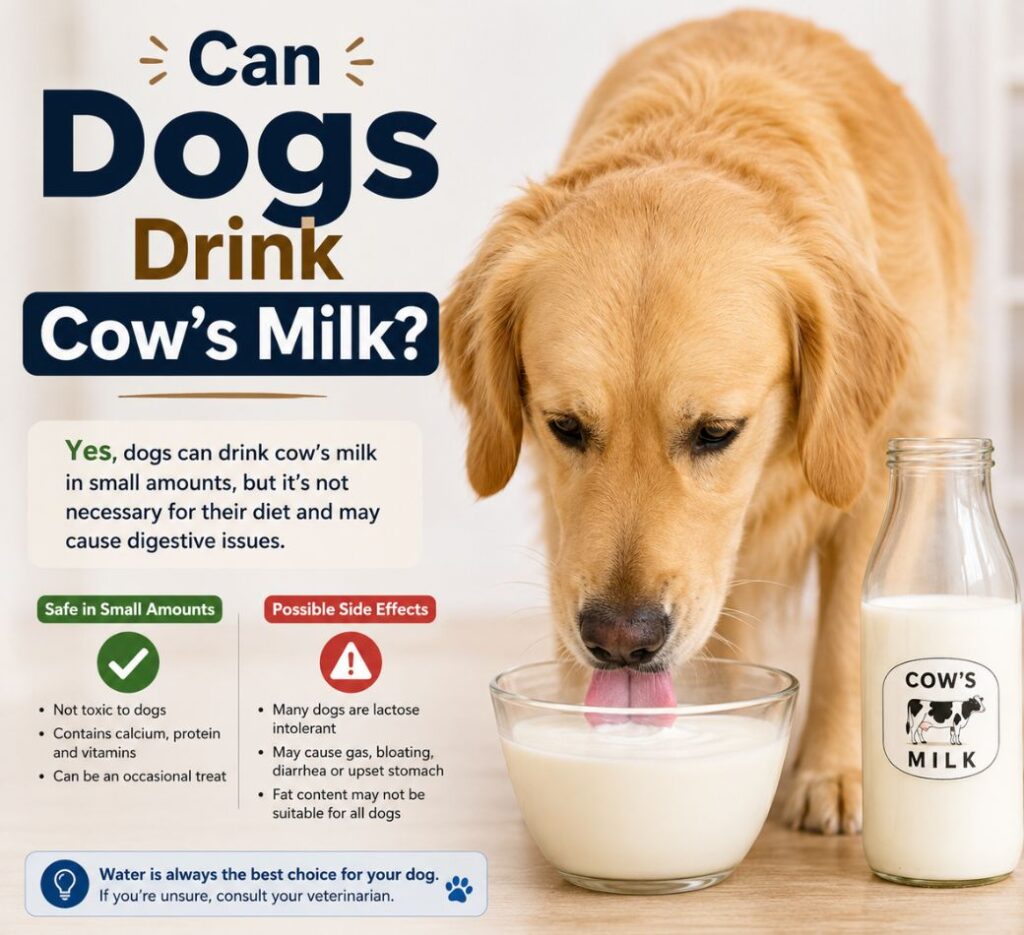
Dogs can drink small amounts of cow’s milk occasionally, but many dogs struggle to digest lactose properly. Puppies naturally produce lactase enzyme to digest their mother’s milk. As dogs age, lactase production declines significantly.
Because of this biological change, adult dogs often develop varying levels of lactose intolerance.
Small servings may not harm healthy dogs, but larger amounts frequently cause digestive problems.
What Happens in a Dog’s Gut After Drinking Milk?
When lactose enters the canine gastrointestinal tract without enough lactase enzyme to break it down, bacteria ferment the undigested sugar inside the intestines. This fermentation process creates:
- Gas
- Bloating
- Loose stool
- Abdominal discomfort
- Diarrhea
High-fat dairy products can also increase pancreatitis risk in dogs, especially in overweight breeds or dogs with sensitive digestive systems.
Lactose Intolerance in Dogs Symptoms
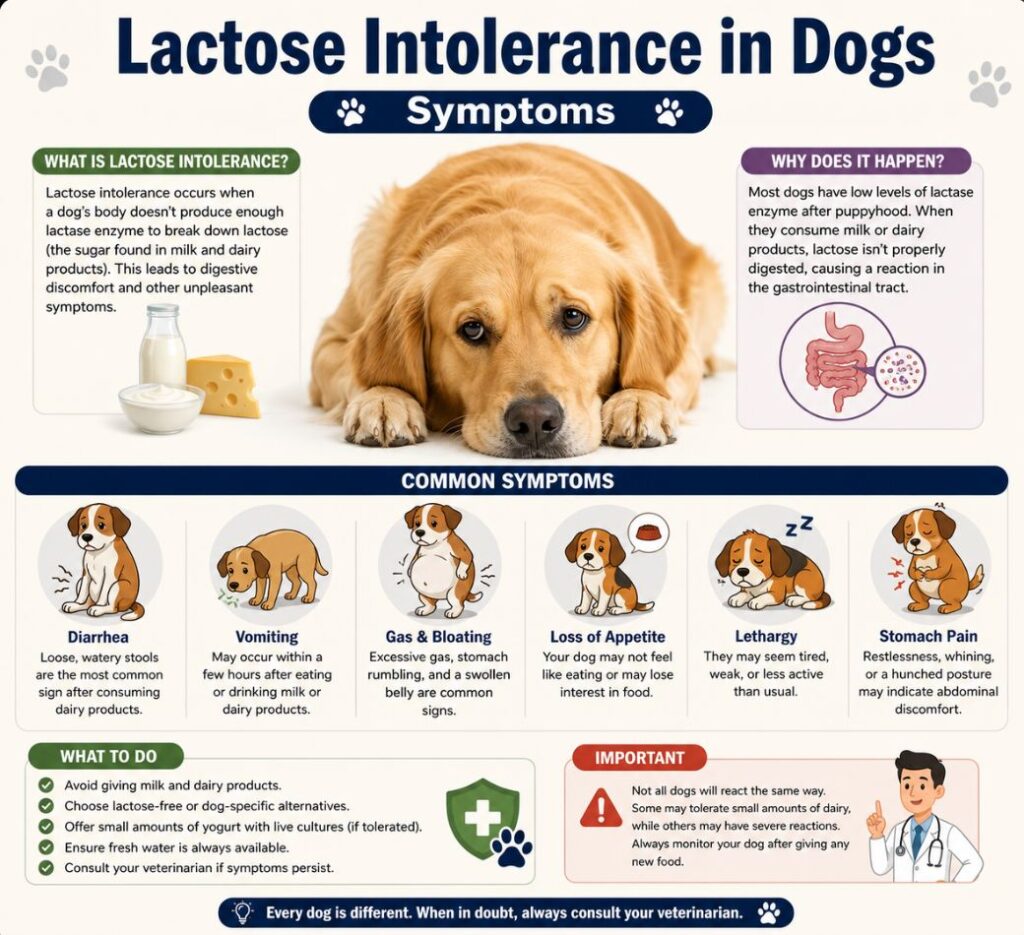
Symptoms usually appear within a few hours after dairy consumption.
Common Symptoms
| Mild Symptoms | Moderate Symptoms | Severe Symptoms |
|---|---|---|
| Gas | Diarrhea | Persistent vomiting |
| Mild bloating | Stomach cramps | Severe dehydration |
| Soft stool | Excessive drooling | Bloody stool |
| Mild discomfort | Loss of appetite | Extreme lethargy |
Signs of Dairy Allergy in Dogs
Lactose intolerance differs from a dairy allergy.
A dairy allergy involves the immune system and may cause:
- Itchy skin
- Ear infections
- Red paws
- Hives
- Facial swelling
Contact your veterinarian immediately if your dog shows allergic reactions after consuming dairy.
Puppy Digestion and Milk
Many owners assume puppies need cow’s milk, but puppies should only drink their mother’s milk or veterinarian-approved puppy formula.
Cow’s milk contains different nutrient ratios than canine milk and may upset a puppy’s digestive system.
Why Cow’s Milk Does Not Work Well for Puppies
Cow’s milk:
- Contains too much lactose
- Lacks ideal canine nutrition
- May trigger diarrhea quickly
- Can contribute to dehydration
Never replace puppy formula with standard dairy milk.
Comparative Analysis of Dairy Milks for Dogs
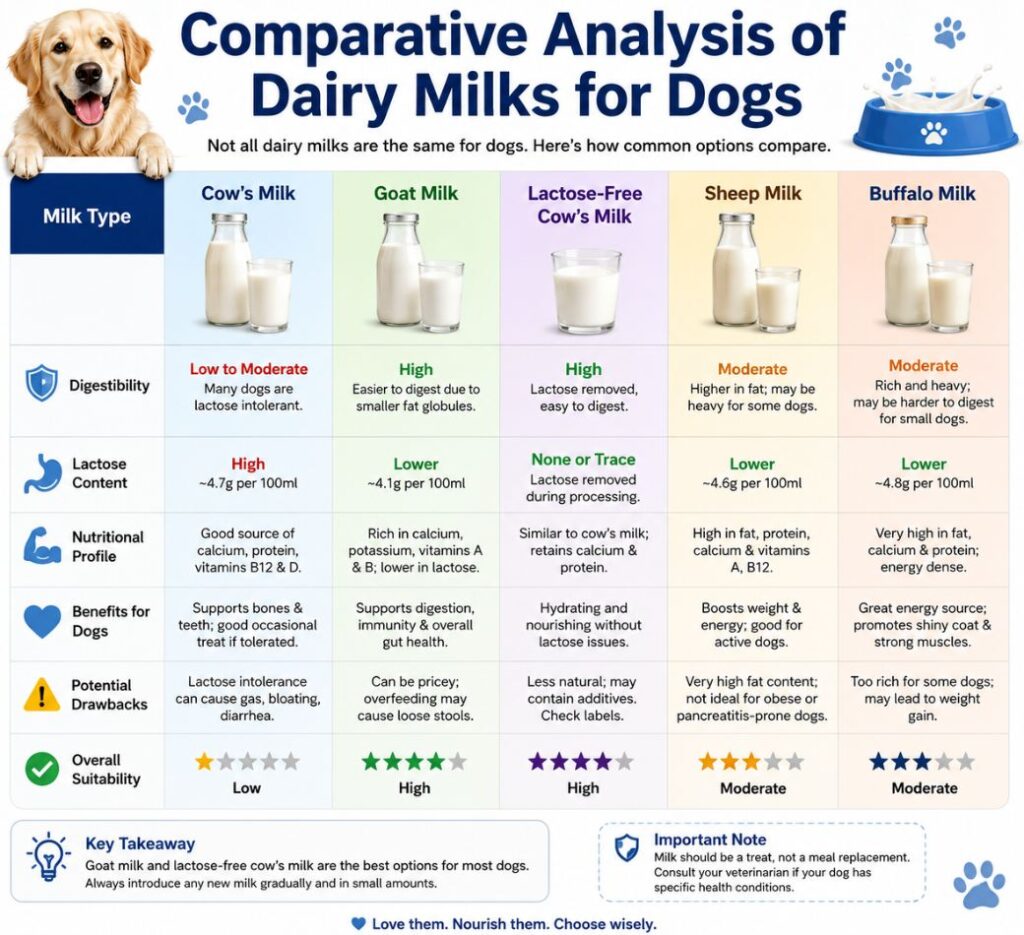
Cow’s Milk vs Goat’s Milk vs Lactose-Free Milk vs Plant-Based Milks
| Milk Type | Lactose Level | Fat Percentage | Digestibility Rating | Potential Risk Factors |
|---|---|---|---|---|
| Cow’s Milk | High | Moderate | Low to Moderate | Gas, diarrhea, pancreatitis |
| Goat’s Milk | Lower | Moderate | Moderate | Still contains lactose |
| Lactose-Free Milk | Very Low | Moderate | Higher | Fat content may still upset stomach |
| Almond Milk | None | Low | Moderate | Added sugars and xylitol risk |
| Soy Milk | None | Low | Moderate | Soy sensitivity in some dogs |
| Coconut Milk | None | High | Low to Moderate | High fat may trigger pancreatitis |
| A2 Milk | Moderate | Moderate | Slightly Easier | Still contains lactose |
Can Dogs Drink Goat’s Milk?
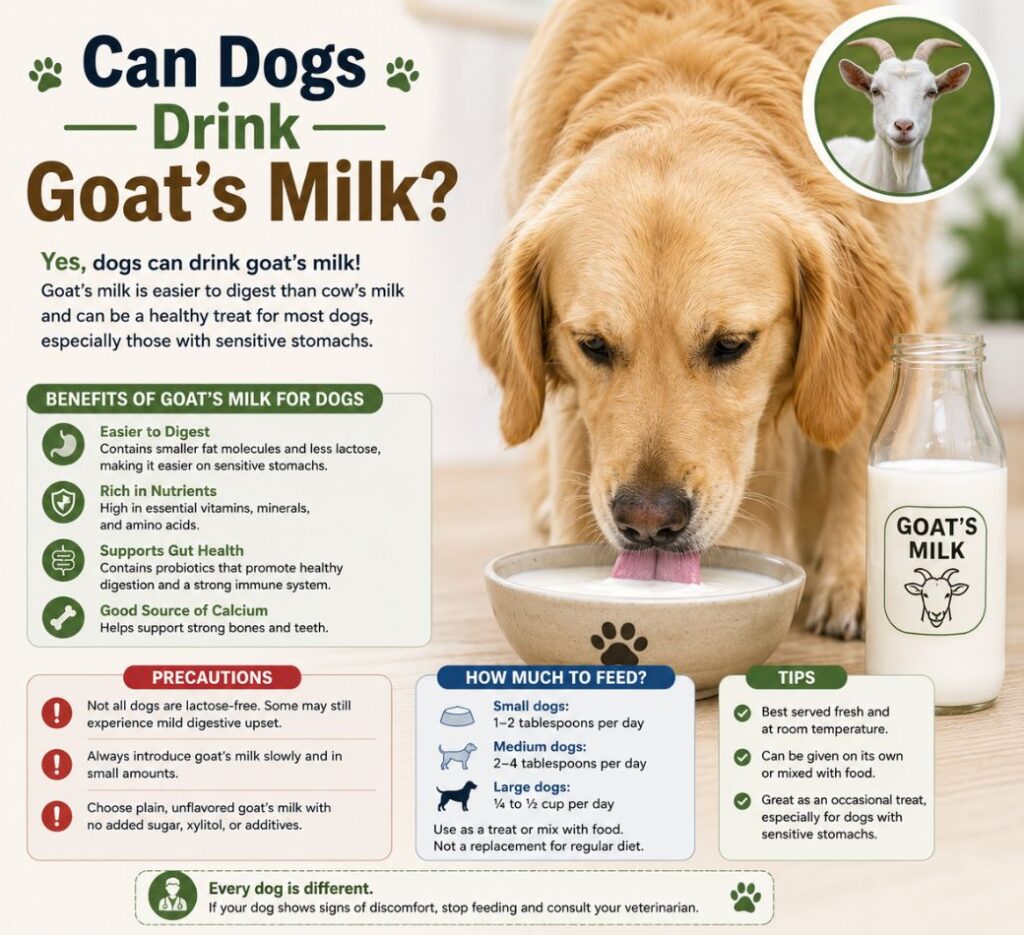
Goat’s milk contains less lactose than cow’s milk, so some dogs digest it more easily. However, goat’s milk still contains sugar and fat.
Many pet owners use goat’s milk as an occasional topper rather than a daily beverage.
Benefits of Goat’s Milk
- Easier digestion for some dogs
- Contains probiotics
- Offers calcium and protein
- May support gut health moderately
Risks of Goat’s Milk
- Still causes symptoms in lactose-intolerant dogs
- Adds extra calories
- May trigger loose stool
Is Lactose-Free Milk Safe for Dogs?
Lactose-free milk usually works better because manufacturers remove lactose using lactase enzyme treatment.
However, lactose-free products still contain:
- Fat
- Calories
- Dairy proteins
Dogs with dairy allergies may still react negatively.
Use small servings only.
Dog-Safe Milk Alternatives
Several milk alternatives work better than traditional dairy.
Safer Options
| Alternative | Safe in Small Amounts? | Notes |
|---|---|---|
| Unsweetened almond milk | Yes | Avoid xylitol |
| Unsweetened oat milk | Yes | Lower fat option |
| Unsweetened soy milk | Sometimes | Monitor digestion |
| Goat’s milk | Sometimes | Easier to digest |
| Plain kefir | Yes | Contains probiotics |
Avoid flavored products, sweeteners, chocolate additives, and artificial syrups.
The 5-Day “Milk-Trial” Protocol
This structured method helps owners test dairy tolerance safely.
Day 1: Baseline Observation
Do not feed any dairy products.
Track:
- Stool quality
- Energy level
- Appetite
- Gas frequency
Day 2: Introduce Tiny Amount
Offer:
- 1 teaspoon for small dogs
- 2 teaspoons for medium dogs
- 1 tablespoon for large dogs
Use plain lactose-free milk or plain goat’s milk.
Day 3: Monitor Symptoms
Watch for:
- Loose stool
- Vomiting
- Gas
- Excessive licking
- Reduced activity
Stop immediately if symptoms appear.
Day 4: Repeat Small Serving
If no symptoms appear, repeat the same amount.
Do not increase the portion yet.
Day 5: Evaluate Tolerance
Review your notes and assess:
- Stool consistency
- Appetite
- Behavior
- Energy
- Hydration
Dogs that remain symptom-free may tolerate occasional dairy treats in moderation.
Digital Dairy Tracking Log Template
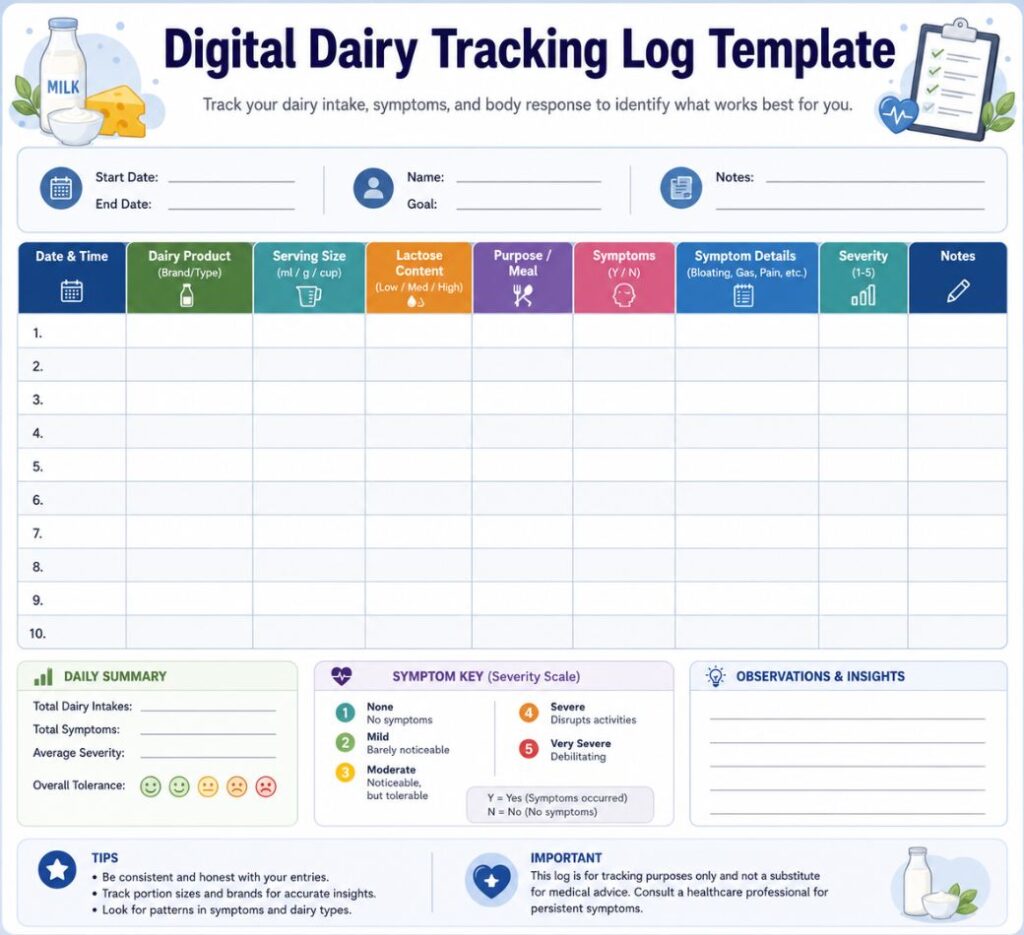
Track These Daily Metrics
| Category | Observation |
|---|---|
| Stool Quality | Normal / Soft / Diarrhea |
| Gas Level | None / Mild / Severe |
| Energy | Normal / Low |
| Appetite | Normal / Reduced |
| Skin Reaction | Yes / No |
| Vomiting | Yes / No |
Clinical Observation: Treat-Stacking and Chronic GI Upset
A 6-year-old Labrador experienced recurring digestive upset for months. The owner fed:
- Milk with breakfast
- Cheese treats during training
- Yogurt at night
Each serving appeared harmless individually, but together they exceeded safe fat and lactose limits.
Clinical Markers
Veterinarians observed:
- Chronic soft stool
- Weight gain
- Elevated pancreatic enzymes
- Frequent bloating
Recovery Path
The owner eliminated dairy completely for six weeks and followed the 10% calorie rule for treats.
Results included:
- Normal stool consistency
- Improved energy
- Reduced bloating
- Healthy weight stabilization
This case demonstrates how small dairy servings can accumulate throughout the day.
Understanding the 10% Treat Rule
Treats should never exceed 10% of your dog’s daily calorie intake.
Example
If your dog eats:
- 500 calories daily
Treats should stay under:
- 50 calories total
Milk, cheese, whipped cream, and yogurt all count toward this limit.
Pancreatitis Risk in Dogs From Fat
High-fat dairy products create additional health risks.
Dangerous Dairy Foods
Avoid:
- Ice cream
- Heavy cream
- Sweetened condensed milk
- Butter
- Full-fat whipped cream
These foods may trigger pancreatitis, a painful inflammatory condition affecting the pancreas.
Pancreatitis Symptoms
- Vomiting
- Abdominal pain
- Hunched posture
- Fever
- Loss of appetite
Seek veterinary care immediately if these symptoms develop.
When to Call a Vet for Dog Digestive Upset
Contact your veterinarian if your dog experiences:
- Diarrhea lasting over 24 hours
- Repeated vomiting
- Blood in stool
- Severe bloating
- Lethargy
- Refusal to eat
- Signs of dehydration
Young puppies and senior dogs require faster medical attention
Safe Dairy Treats for Dogs
Some dairy products work better than others.
Better Dairy Choices
| Safer Treats | Riskier Treats |
|---|---|
| Plain yogurt | Ice cream |
| Kefir | Flavored yogurt |
| Small goat cheese portions | Cream cheese |
| Lactose-free yogurt | Milkshakes |
Choose unsweetened products without xylitol.
FAQs
Can dogs drink cow’s milk every day?
No. Most adult dogs do not digest lactose efficiently. Daily dairy intake may trigger chronic digestive upset.
How much milk is safe for a dog?
Small amounts work best. Most veterinarians recommend only a few teaspoons for small dogs and limited servings for larger breeds.
Can dogs drink goat’s milk safely?
Some dogs tolerate goat’s milk better because it contains less lactose, but it still may cause digestive symptoms.
Is lactose-free milk safe for dogs?
Lactose-free milk usually causes fewer digestive problems, but moderation still matters because fat and calories remain present.
What are symptoms of upset stomach in dogs after dairy?
Common symptoms include gas, bloating, diarrhea, vomiting, and stomach discomfort.
Can dogs drink almond milk?
Unsweetened almond milk may work in small amounts, but avoid products containing xylitol or added sugar.
Can dogs have pumpkin spice lattes?
No. Pumpkin spice lattes often contain caffeine, sugar, spices, and dairy that may harm dogs.
Conclusion
Dogs can drink cow’s milk occasionally, but many adult dogs struggle to digest lactose properly. Lactose intolerance in dogs symptoms often include gas, bloating, diarrhea, and stomach discomfort.
Pet owners should introduce dairy carefully, monitor symptoms closely, and prioritize moderation. Lactose-free milk, goat’s milk, and plain probiotic dairy products may work better for sensitive dogs, but no dairy product fits every dog safely.
Always follow the 10% treat rule and contact your veterinarian if digestive symptoms become severe or persistent.
Editorial Disclaimer
This article provides educational information only and does not replace professional veterinary advice, diagnosis, or treatment. Always consult your veterinarian before making major dietary changes for your dog.