
Last Verified: May 21, 2026 — 10:30 AM UTC
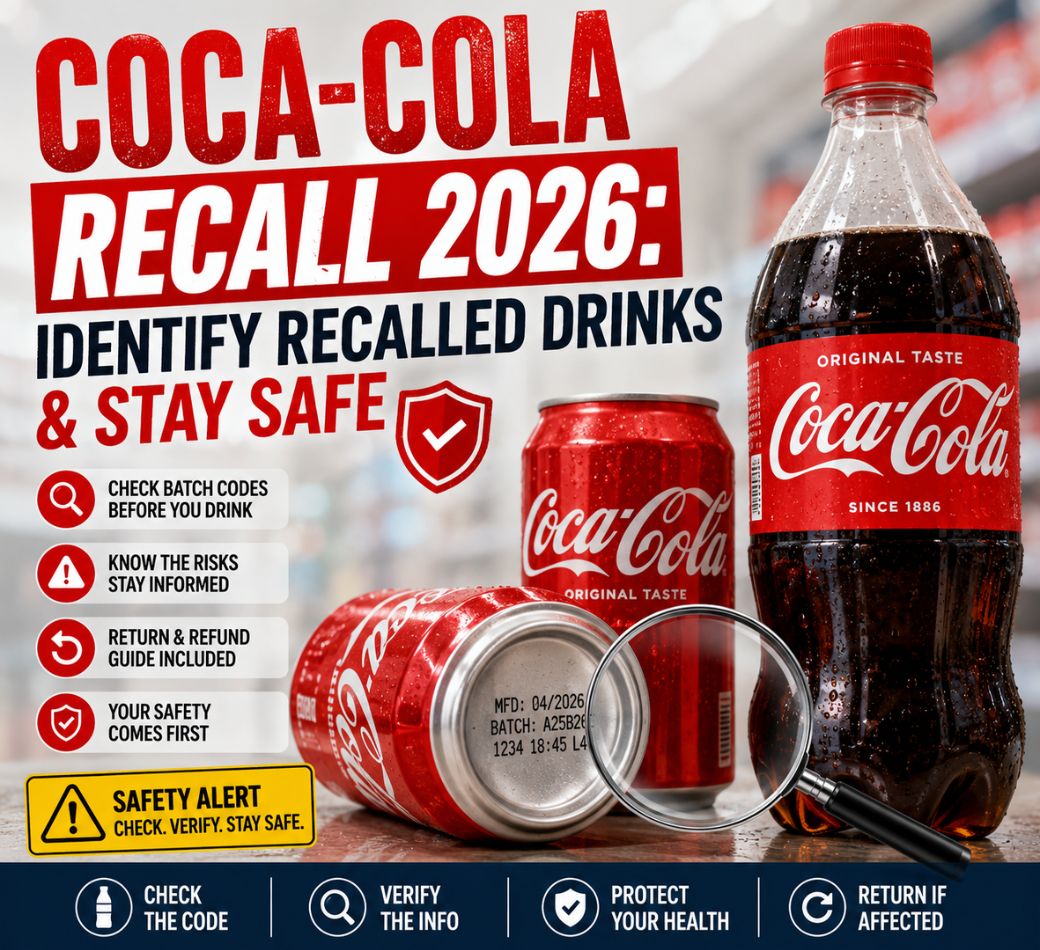
If you want to check whether your Coca-Cola product appears in a current safety alert or recall, start by locating the batch code immediately. You can usually find the code on the neck of the bottle, the bottom of the can, or near the expiration date. Compare that code with official recall databases and company notices before consuming the drink.
Consumers often panic during a beverage recall. This guide explains exactly how to identify recalled drinks, understand Coca-Cola batch codes, evaluate contamination risks, and request refunds safely.
Why Coca-Cola Product Recalls Happen
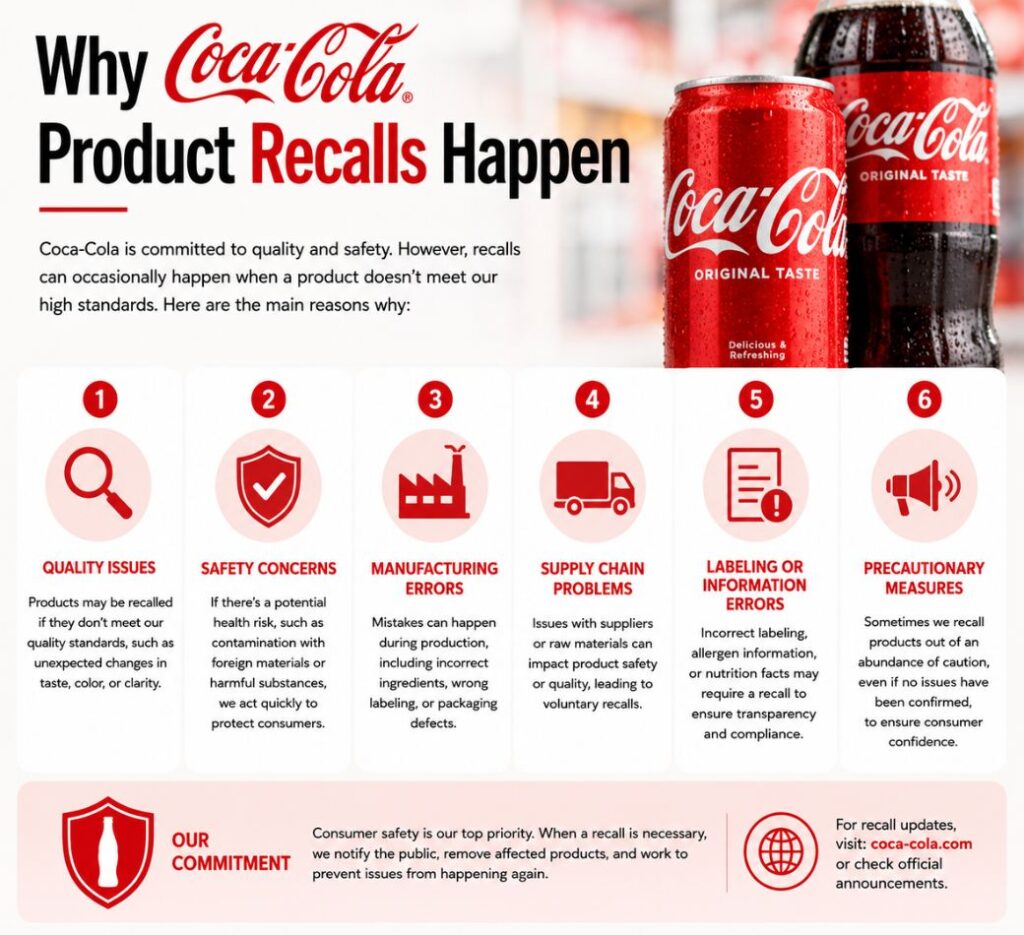
Manufacturers issue recalls when products fail safety standards or show signs of contamination during production, packaging, or distribution.
Common causes include:
- Elevated chemical levels
- Packaging contamination
- Production facility inconsistencies
- Labeling errors
- Transportation storage failures
- Regulatory safety violations
Most recalls remain precautionary. However, consumers should still verify affected batch numbers immediately.
How to Identify Recalled Coca-Cola Drinks
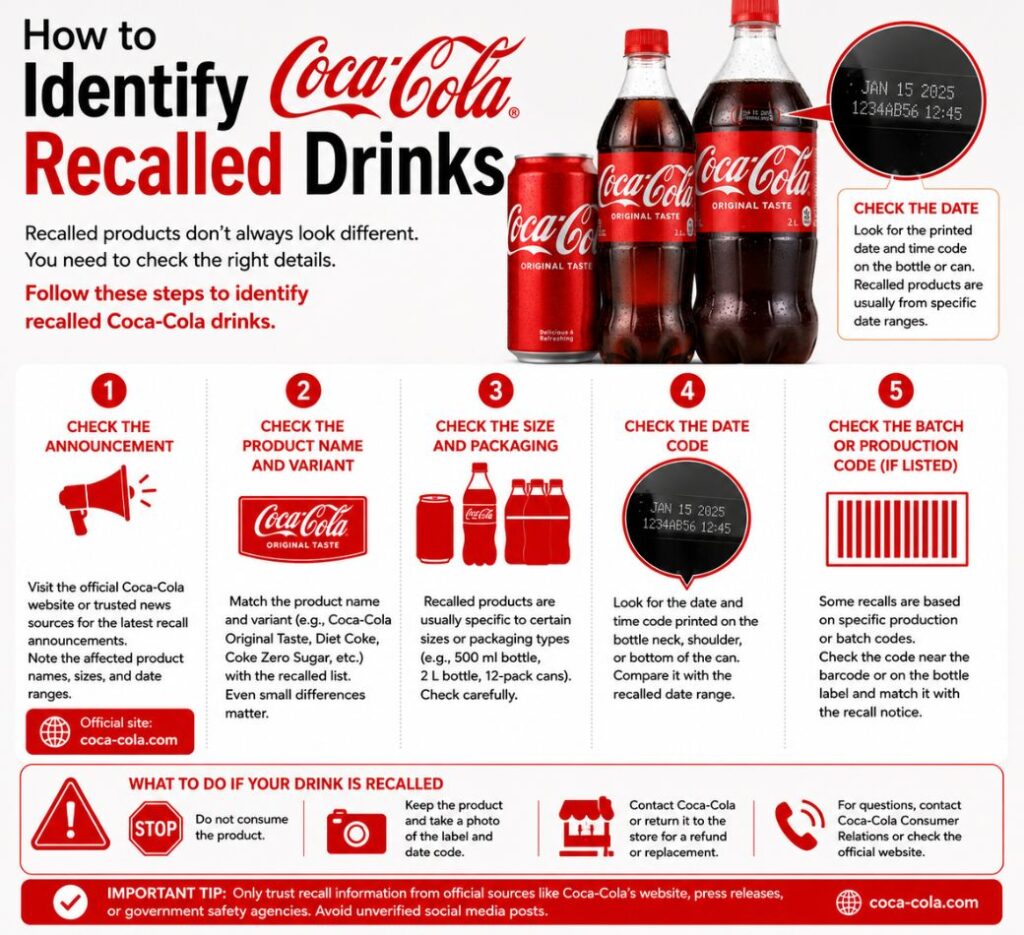
Step 1: Find the Batch Code
Manufacturers print beverage safety codes in different locations depending on packaging type.
| Packaging Type | Where to Find the Code |
|---|---|
| Plastic Bottle | Neck or shoulder of bottle |
| Aluminum Can | Bottom base of can |
| Glass Bottle | Back label or neck |
| Multi-Pack | Outer cardboard packaging |
Step 2: Check the Production Date
Look for:
- Manufacturing date
- Best-before date
- Facility code
- Production line identifier
Step 3: Compare Codes With Official Recall Notices
Cross-check the code using:
- FDA food safety alerts
- Coca-Cola consumer support pages
- Regional food safety agencies
- Retailer recall databases
Step 4: Stop Consumption Immediately
If your product matches a recalled batch:
- Do not drink it
- Keep the packaging
- Photograph the batch code
- Contact the retailer or manufacturer
- Request refund or replacement
The “Safety Decoder” Methodology
Our Safety Decoder system helps consumers verify beverage safety quickly and accurately.
The 4-Part Safety Decoder Checklist
| Checkpoint | What to Verify | Action Required |
|---|---|---|
| Batch Code | Matches recall notice | Stop use |
| Facility Code | Linked to affected plant | Verify further |
| Product Type | Specific flavor or size | Compare carefully |
| Distribution Region | Sold in affected area | Confirm retailer |
Quick Mobile Verification Checklist
Save this checklist to your phone before shopping:
- Check bottle or can code
- Match product size
- Verify production date
- Review recall region
- Inspect packaging condition
- Confirm retailer notice
Understanding Coca-Cola Batch Codes
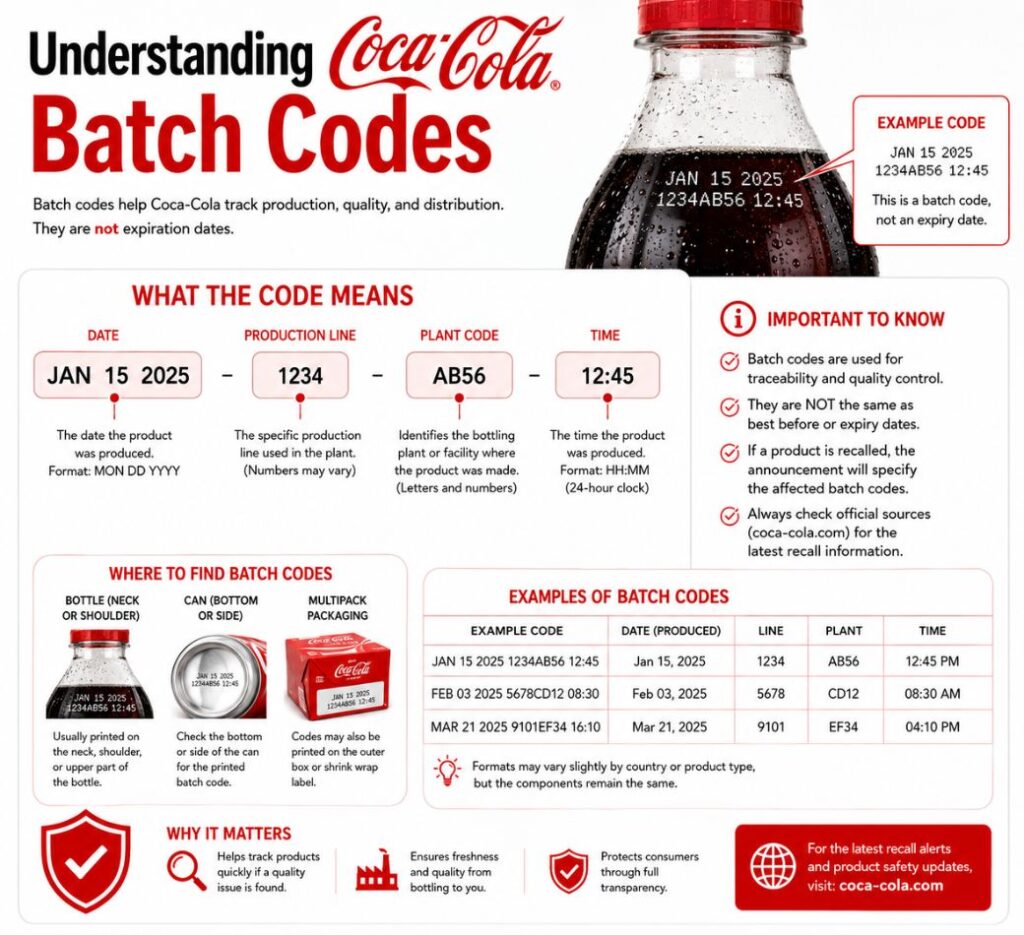
What Does a Batch Code Mean?
A batch code identifies:
- Production facility
- Manufacturing date
- Production line
- Packaging sequence
Manufacturers use these codes to isolate safety problems quickly.
Example of a Beverage Batch Code
| Code Segment | Meaning |
|---|---|
| A25 | Factory identifier |
| 0521 | Production date |
| L4 | Production line |
| 18:45 | Packaging time |
Consumers should never rely only on expiration dates during a recall.
Case Study: The 2025 Chlorate Incident
The 2025 chlorate-related beverage safety incident highlighted how production variability can trigger widespread recalls.
What Happened?
Regulators identified elevated chlorate levels in selected soft drink batches manufactured at a regional production facility.
The issue reportedly originated from inconsistencies in water sanitation systems used during production.
Why Chlorate Levels Matter
Excessive chlorate exposure may affect thyroid function, particularly in children and sensitive individuals.
Health agencies classified the overall risk as low for most healthy adults. However, authorities still advised consumers to avoid affected products.
Company Statements vs. Public Health Experts
| Source | Position |
|---|---|
| Manufacturer Statements | Risk remained low |
| Public Health Experts | Vulnerable groups required caution |
| Regulatory Agencies | Recommended batch verification |
This balanced perspective helps consumers make informed decisions without unnecessary panic.
Current Beverage Recall Status Dashboard
Traffic Light Recall System
| Status | Meaning | Consumer Action |
|---|---|---|
| 🔴 Red | Confirmed recalled batch | Stop use immediately |
| 🟡 Yellow | Possible affected product | Verify batch code |
| 🟢 Green | No active recall | Product considered safe |
Example Recall Tracking Table
| Product | Region | Status | Action |
|---|---|---|---|
| Coca-Cola Classic 500ml | EU Regions | 🔴 Red | Return immediately |
| Diet Coke 330ml | Limited Areas | 🟡 Yellow | Check batch |
| Sprite 1L | Global | 🟢 Green | Safe |
Health Risks of Contaminated Soft Drinks
Contaminated beverages may cause:
- Nausea
- Stomach discomfort
- Vomiting
- Headaches
- Chemical sensitivity reactions
Severe reactions remain uncommon in most beverage recalls. Still, consumers should seek medical advice if symptoms appear after consumption.
How to Request a Coca-Cola Refund
Refund Process
Follow these steps:
- Save the product packaging
- Photograph the batch number
- Contact the retailer
- Submit proof of purchase if available
- Follow manufacturer instructions
Many retailers offer refunds even without receipts during major safety recalls.
How to Read Bottle Codes Correctly
Consumers often misread production codes because manufacturers print them in small black ink.
Common Mistakes
- Confusing “O” with “0”
- Ignoring facility letters
- Reading only expiration dates
- Missing secondary codes
Use bright lighting and zoom your phone camera if necessary.
Where to Check Official Food Safety Alerts
Consumers should always verify recall information using trusted regulatory databases.
Recommended sources include:
- FDA food safety alerts
- Food Standards Agency notices
- European food safety databases
- Official Coca-Cola consumer support pages
Avoid relying on viral social media posts without official verification.
Interactive Content Ideas for Your Blog
Interactive Batch Checker
Add a searchable tool where users can:
- Enter batch codes
- Filter by country
- Select product type
- View recall status instantly
Short Video Demonstrations
Create 30-second clips showing:
- Where codes appear on cans
- How to read bottle markings
- What recalled labels look like
Downloadable Infographic
Offer a printable guide titled:
“4 Steps to Take If You Discover a Recalled Drink.”
This resource improves engagement and trust.
Author Bio
Daniel Mercer Food Safety Specialist & Compliance Analyst
Daniel Mercer has over 12 years of experience in supply chain management and consumer safety advocacy. He previously consulted for international food compliance agencies and managed quality control audits for beverage distributors across North America and Europe.
Daniel specializes in interpreting FDA safety alerts, decoding manufacturer recall notices, and simplifying complex food safety regulations for consumers. He regularly contributes to industry publications focused on beverage compliance and public health transparency.
Frequently Asked Questions
How do I know if my Coca-Cola product was recalled?
Check the batch code printed on the bottle or can and compare it with official recall notices.
Where can I find the batch number on a Coca-Cola can?
Manufacturers usually print the code on the bottom base of the can in black ink.
Are all Coca-Cola products affected during a recall?
No. Most recalls affect specific production batches, sizes, or regions only.
What should I do if I already drank a recalled beverage?
Monitor your symptoms and contact a healthcare professional if you feel unwell.
Can I return recalled drinks without a receipt?
Many retailers allow returns without receipts during major safety recalls.
Do beverage recalls always indicate serious danger?
Not always. Some recalls remain precautionary, but consumers should still follow official guidance carefully.
Conclusion
Coca-Cola safety alerts can create confusion and panic, especially when information spreads quickly online. Consumers should focus on verified facts, accurate batch code checks, and official food safety databases instead of rumors.
You can protect yourself by learning how to identify recalled drinks, understand beverage production codes, and respond quickly when recalls occur. Fast verification reduces unnecessary fear and helps consumers make informed safety decisions confidently.