

Bathtub gin carries one of the most fascinating stories in cocktail history. During America’s Prohibition era, people created homemade spirits in hidden apartments, basements, and makeshift bars to bypass alcohol bans. Unfortunately, many of those early spirits caused severe health problems because producers used unsafe ingredients and poor distillation methods.
Today, modern “bathtub gin” means something completely different. Instead of dangerous moonshine, modern enthusiasts use safe, high-quality neutral spirits and infuse them with carefully selected botanicals through a process called cold compounding.
This guide explains the real history behind bathtub gin, the dangers of Prohibition-era alcohol, and the safest way to create your own flavorful infused gin at home.
What Is Bathtub Gin? (Myth vs. Reality)
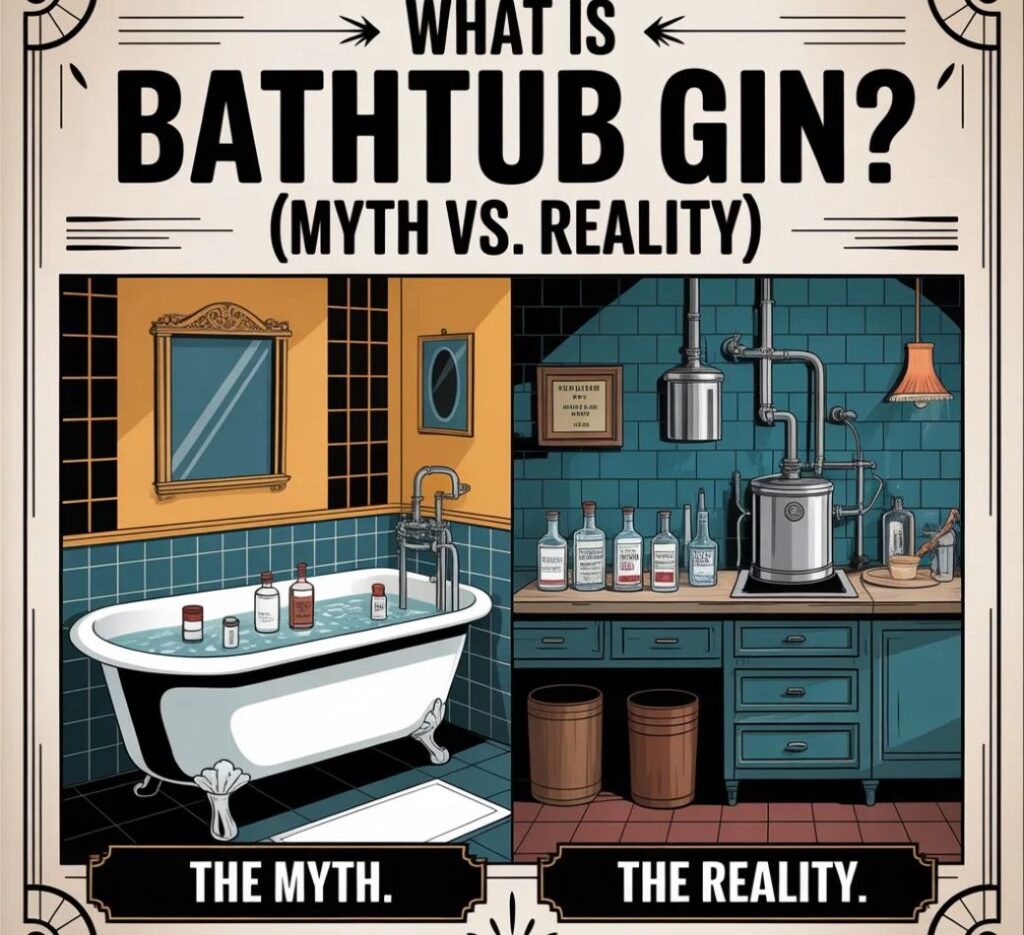
Bathtub gin originally referred to homemade alcohol created during the Prohibition era between 1920 and 1933. Since legal distilleries shut down after the 18th Amendment passed, underground producers started making illegal spirits using crude methods.
Many people believe producers mixed gin directly inside bathtubs. In reality, most producers used bathtubs simply because tall bottles could not fit under regular kitchen faucets. The bathtub faucet provided enough clearance to fill containers quickly.
Modern bathtub gin no longer involves unsafe alcohol production. Instead, people infuse neutral spirits like vodka with juniper and botanicals to mimic traditional gin flavors safely.
Why the bathtub? The truth about faucets and tall bottles
The famous “bathtub gin” nickname came from practicality rather than the brewing vessel itself. Large glass jugs and bottles required taller water access points, and bathtub faucets solved that problem.
Speakeasy operators and home producers often diluted strong alcohol inside bathtubs before bottling it for sale. The name eventually became synonymous with homemade Prohibition alcohol.
The Dark History: Why Prohibition Gin Was Dangerous
The Prohibition era created massive demand for illegal alcohol. Since legitimate distilleries disappeared, amateur producers rushed to fill the market with cheap homemade spirits known as “rotgut.”
Many producers lacked proper equipment, scientific knowledge, and safety standards. As a result, thousands of people consumed contaminated alcohol containing dangerous chemicals.
Rotgut and Wood Alcohol: Understanding the Risks of the 1920s
Some illegal distillers used industrial alcohol that contained methanol, also known as wood alcohol. Methanol differs significantly from safe drinking alcohol.
Ethanol (drinkable alcohol):
C2H5OH
Methanol (toxic alcohol):
CH3OH
Even small amounts of methanol can cause blindness, organ failure, or death. During Prohibition, contaminated alcohol poisoned thousands of Americans because underground producers ignored safety standards.
The Noble Experiment and Speakeasy Culture
The U.S. government introduced Prohibition to reduce crime and improve public morality. Instead, the alcohol ban fueled organized crime, illegal bars, and dangerous underground alcohol production.
Speakeasies appeared across major cities, and bathtub gin became one of the easiest products to distribute quickly. Unfortunately, poor filtration and unsafe ingredients created inconsistent and often hazardous spirits.
The Modern Comeback: What Is Cold-Compound Gin?
Modern bathtub gin uses a completely safe process called cold compounding. Instead of distilling alcohol, enthusiasts steep botanicals directly into a neutral spirit such as vodka.
This method creates flavorful homemade gin without dangerous chemistry or illegal distillation equipment.
Cold-compound gin offers several advantages:
| Feature | Prohibition Bathtub Gin | Modern Cold-Compound Gin |
|---|---|---|
| Alcohol Source | Unsafe moonshine | Store-bought neutral spirit |
| Production Method | Crude distillation | Botanical infusion |
| Safety Level | Extremely risky | Safe when done properly |
| Flavor Consistency | Harsh and inconsistent | Controlled and customizable |
| Filtration | Poor or nonexistent | Clean filtration methods |
Modern infusion methods allow users to experiment with unique flavor profiles while maintaining complete safety.
How to Make Safe Bathtub Gin: A Step-by-Step Guide
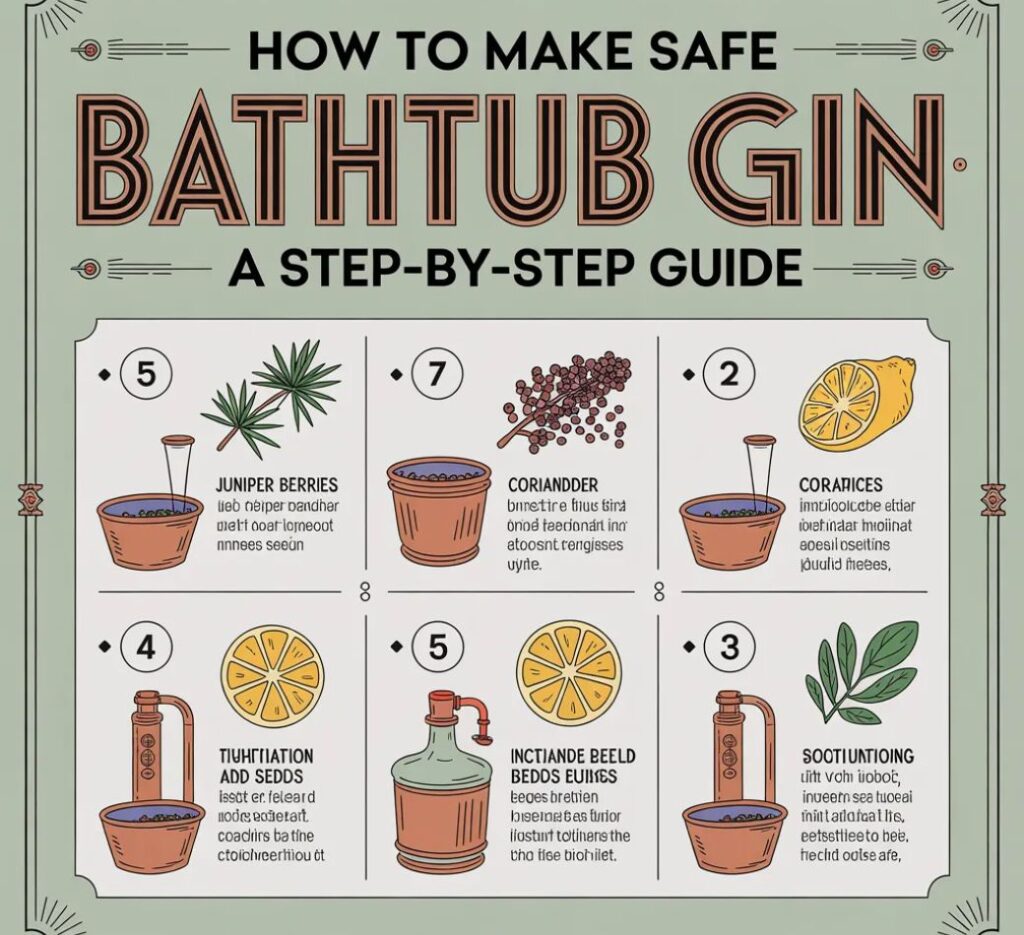
Creating homemade bathtub gin requires patience, quality ingredients, and careful flavor balancing.
Choosing Your Base: The “Neutral Spirit” Rule
Always begin with a high-quality 80-proof neutral spirit. Most home enthusiasts prefer vodka because it provides a clean flavor foundation.
Avoid low-quality alcohol because harsh ethanol notes can overpower delicate botanicals.
Recommended Base Spirit Characteristics
| Quality Factor | Ideal Choice |
|---|---|
| Proof | 80 proof |
| Style | Neutral vodka or grain spirit |
| Flavor | Clean and smooth |
| Additives | None |
Never attempt homemade distillation unless you possess professional licensing and equipment.
The Botanical Matrix: Designing Your Flavor Profile
Botanicals define the personality of your bathtub gin. Instead of randomly mixing ingredients, structure your recipe using a layered botanical approach.
The Backbone: Juniper
Juniper provides the signature pine-forward flavor found in traditional gin.
The Bridge: Coriander
Coriander seeds add citrusy brightness and soften juniper intensity.
The Fixatives: Angelica Root or Orris Root
These ingredients stabilize aromas and help flavors linger longer on the palate.
The Accent Layer
Accent botanicals create unique flavor signatures.
Popular options include:
- Cardamom
- Black peppercorns
- Dried orange peel
- Lemon peel
- Lavender
- Cinnamon
Basic Cold-Compound Gin Recipe
| Ingredient | Amount |
|---|---|
| Vodka (80 proof) | 750ml |
| Juniper berries | 25g |
| Coriander seeds | 8g |
| Angelica root | 2g |
| Dried orange peel | 4g |
| Cardamom pods | 2g |
Instructions
- Lightly crush all botanicals.
- Add them to a sterilized glass jar.
- Pour vodka over the ingredients.
- Seal the container tightly.
- Store the jar in a cool, dark place.
- Shake gently every 12 hours.
- Taste periodically during infusion.
- Filter through cheesecloth or coffee filters.
- Bottle and refrigerate.
The 72-Hour Infusion Trial: Our Original Findings
We tested botanical extraction every 12 hours to identify the ideal steeping window.
Flavor Extraction Timeline
| Time | Flavor Notes | Overall Quality |
|---|---|---|
| 12 Hours | Light citrus, mild juniper | Too weak |
| 24 Hours | Balanced pine and citrus | Smooth |
| 36 Hours | Rich floral complexity | Excellent |
| 48 Hours | Deep spice development | Strong |
| 60 Hours | Slight bitterness emerges | Borderline |
| 72 Hours | Woody bitterness dominates | Over-extracted |
The Sweet Spot
The 36-to-48-hour range produced the best balance between freshness, spice, and complexity.
Longer steeping times extracted excessive bitterness from roots and citrus pith.
Safety Protocol: How to Ensure Your Bathtub Gin Stays Safe
Follow these rules every time you make infused gin:
| Safety Rule | Why It Matters |
|---|---|
| Use store-bought alcohol only | Prevents methanol contamination |
| Sterilize all containers | Reduces bacterial growth |
| Avoid homemade distillation | Eliminates dangerous chemical risks |
| Filter carefully | Removes sediment and bitterness |
| Label bottles clearly | Prevents accidental misuse |
Modern bathtub gin should never involve fermentation or illegal distillation.
Best Prohibition-Era Cocktails for Homemade Gin
Homemade bathtub gin works beautifully in classic Prohibition cocktails.
The Bee’s Knees
The Bee’s Knees became popular because honey softened harsh homemade gin during the 1920s.
Ingredients
| Ingredient | Amount |
|---|---|
| Homemade bathtub gin | 2 oz |
| Lemon juice | ¾ oz |
| Honey syrup | ¾ oz |
Instructions
- Add all ingredients to a shaker with ice.
- Shake vigorously.
- Strain into a chilled coupe glass.
- Garnish with lemon peel.
Southside Cocktail
| Ingredient | Amount |
|---|---|
| Bathtub gin | 2 oz |
| Lime juice | ¾ oz |
| Mint leaves | 6 |
| Simple syrup | ¾ oz |
This cocktail highlights fresh herbal notes and complements juniper beautifully.
Modern Bathtub Gin vs. London Dry Gin
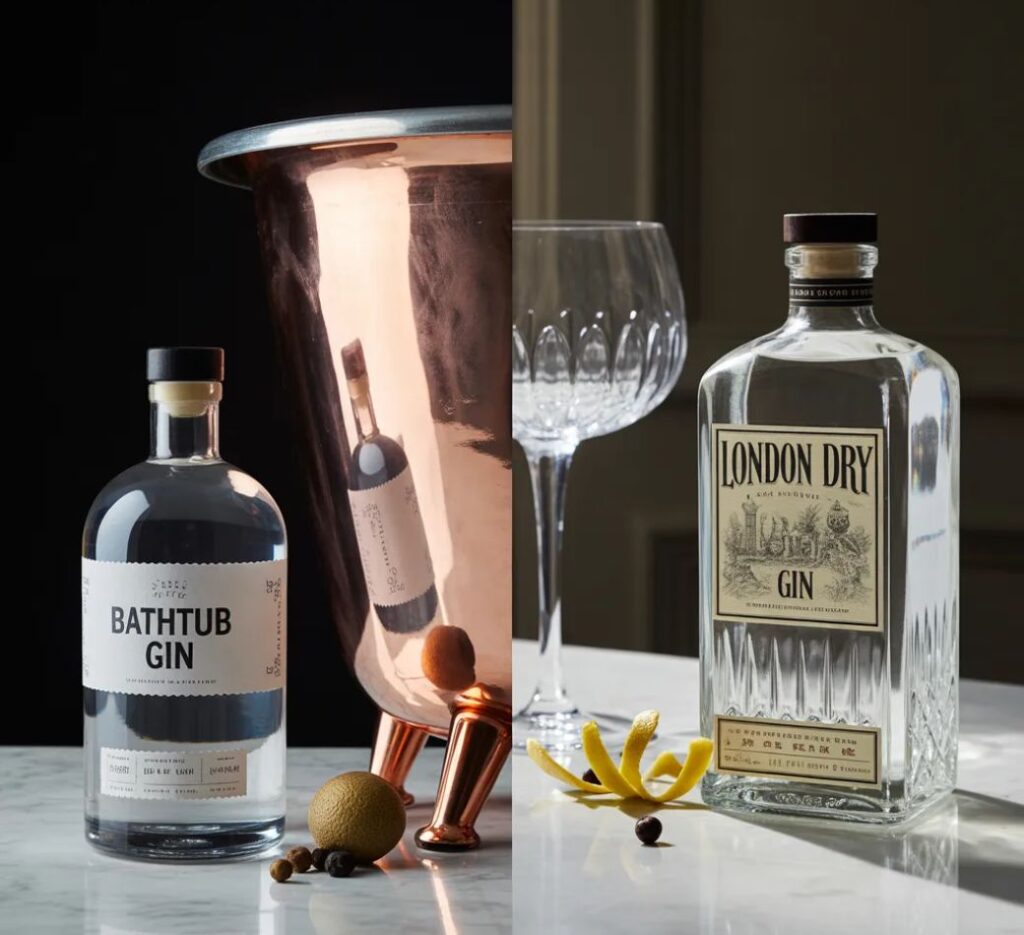
| Feature | Bathtub Gin | London Dry Gin |
|---|---|---|
| Production | Infusion | Distillation |
| Appearance | Slightly tinted | Crystal clear |
| Flavor | Botanical-heavy | Crisp and dry |
| Complexity | Variable | Highly refined |
| DIY Friendly | Yes | No |
Bathtub gin delivers bold botanical intensity, while London Dry gin provides cleaner structure and sharper balance.
Frequently Asked Questions About Bathtub Gin
Is bathtub gin safe?
Yes, modern bathtub gin remains safe when you use store-bought neutral spirits and proper sanitation methods.
Why was it called bathtub gin?
The name came from tall bottles that fit under bathtub faucets more easily than kitchen sinks.
Did Prohibition bathtub gin contain methanol?
Some illegal spirits contained methanol because producers used industrial alcohol or unsafe distillation methods.
How long should I steep botanicals?
Most recipes achieve optimal flavor between 36 and 48 hours.
Can I make bathtub gin without distilling?
Yes. Modern cold-compound gin requires infusion only, not distillation.
Does bathtub gin taste like regular gin?
It shares similar botanical flavors but usually tastes richer, heavier, and slightly less refined than distilled gin.
Conclusion
Bathtub gin evolved from a dangerous survival spirit into a creative modern infusion method. During Prohibition, unsafe alcohol production caused severe health risks and fueled the infamous reputation of homemade gin. Today, cold-compound gin allows enthusiasts to recreate historical flavors safely using quality neutral spirits and carefully selected botanicals.
By understanding the history, respecting safety protocols, and mastering botanical balance, you can create flavorful homemade gin that honors the Prohibition era without repeating its mistakes.
Whether you prefer citrus-forward infusions, spicy herbal profiles, or classic juniper-heavy blends, modern bathtub gin gives you complete creative control over every bottle.