

Introduction
The energy drink market continues to evolve as consumers search for healthier alternatives to traditional canned energy beverages. Many people now prefer plant-based energy drink alternatives that offer customizable caffeine levels, cleaner ingredient lists, and lower sugar content.
Lotus Energy Drink Concentrate has emerged as one of the most popular options among home consumers, baristas, and coffee shop owners. Unlike conventional energy drinks that rely heavily on synthetic caffeine and fixed formulas, Lotus allows users to create personalized drinks using plant-derived ingredients, adaptogens, and natural flavor combinations.
For this review, we analyzed ingredient profiles, tested multiple flavor combinations, compared caffeine delivery methods, and evaluated how Lotus performs against commercial energy drinks. This guide explains what Lotus contains, how it works, and which recipes deliver the best balance of flavor, energy, and nutrition.
What Is Lotus Energy Drink Concentrate?
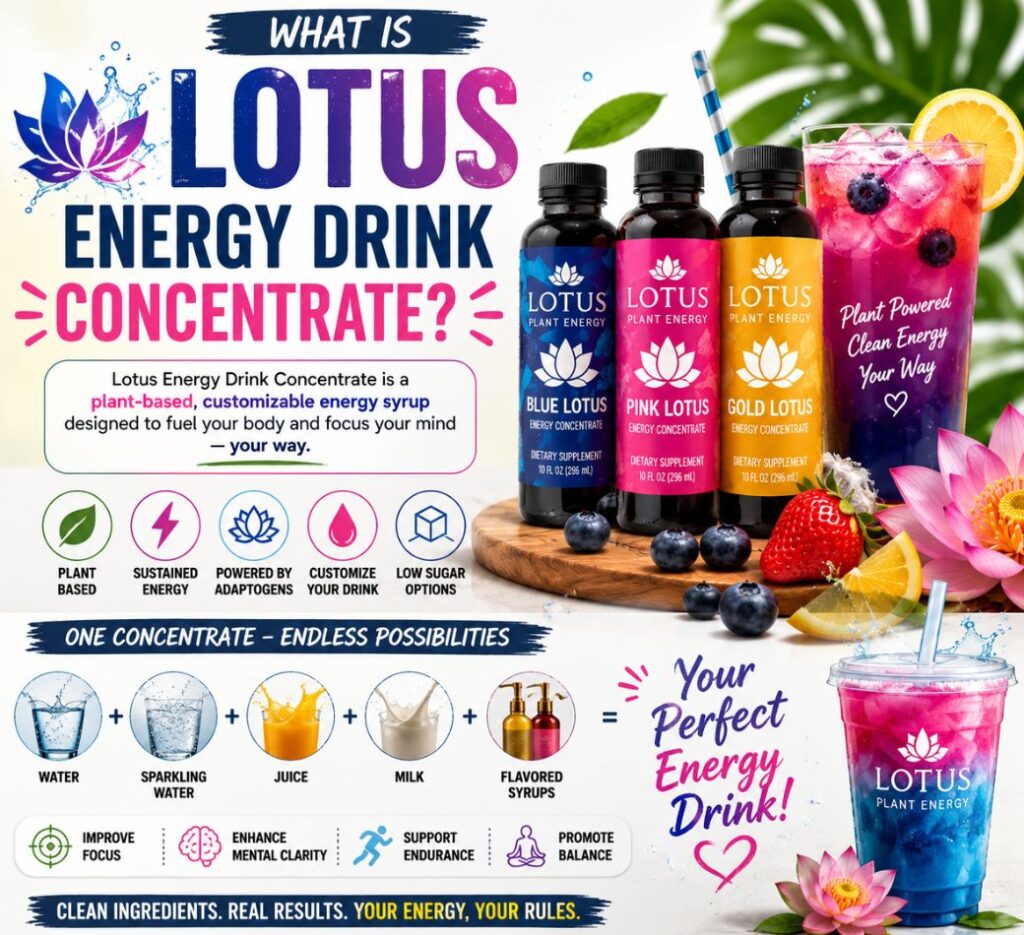
Lotus Energy Drink Concentrate is a plant-based beverage concentrate designed to create customizable energy drinks. Users mix the concentrate with water, sparkling water, fruit juice, flavored syrups, or milk-based ingredients to create hundreds of drink combinations.
The product appeals to consumers who want greater control over:
- Caffeine intake
- Sugar consumption
- Flavor customization
- Calorie content
- Functional ingredients
Unlike pre-packaged energy drinks, Lotus lets users adjust serving sizes to match their preferences.
The Story Behind Lotus Plant Energy
Lotus Plant Energy developed its formulas around the idea that energy drinks should provide flexibility and ingredient transparency. Instead of creating a single ready-to-drink beverage, the company introduced concentrated energy syrups that consumers can customize.
This approach allows users to create low-calorie refreshers, sparkling energy drinks, café-style beverages, and sugar-free alternatives from the same bottle.
How Lotus Differs From Traditional Energy Drinks
| Feature | Lotus Energy Concentrate | Traditional Energy Drinks |
|---|---|---|
| Plant-Based Energy Source | Yes | Usually No |
| Adaptogens | Yes | Rare |
| Customizable Caffeine | Yes | No |
| Sugar Control | User Controlled | Fixed Formula |
| Recipe Flexibility | High | Low |
| Home Mixology Potential | Excellent | Limited |
Lotus Energy Drink Ingredients Breakdown

The ingredient profile drives much of Lotus’s appeal.
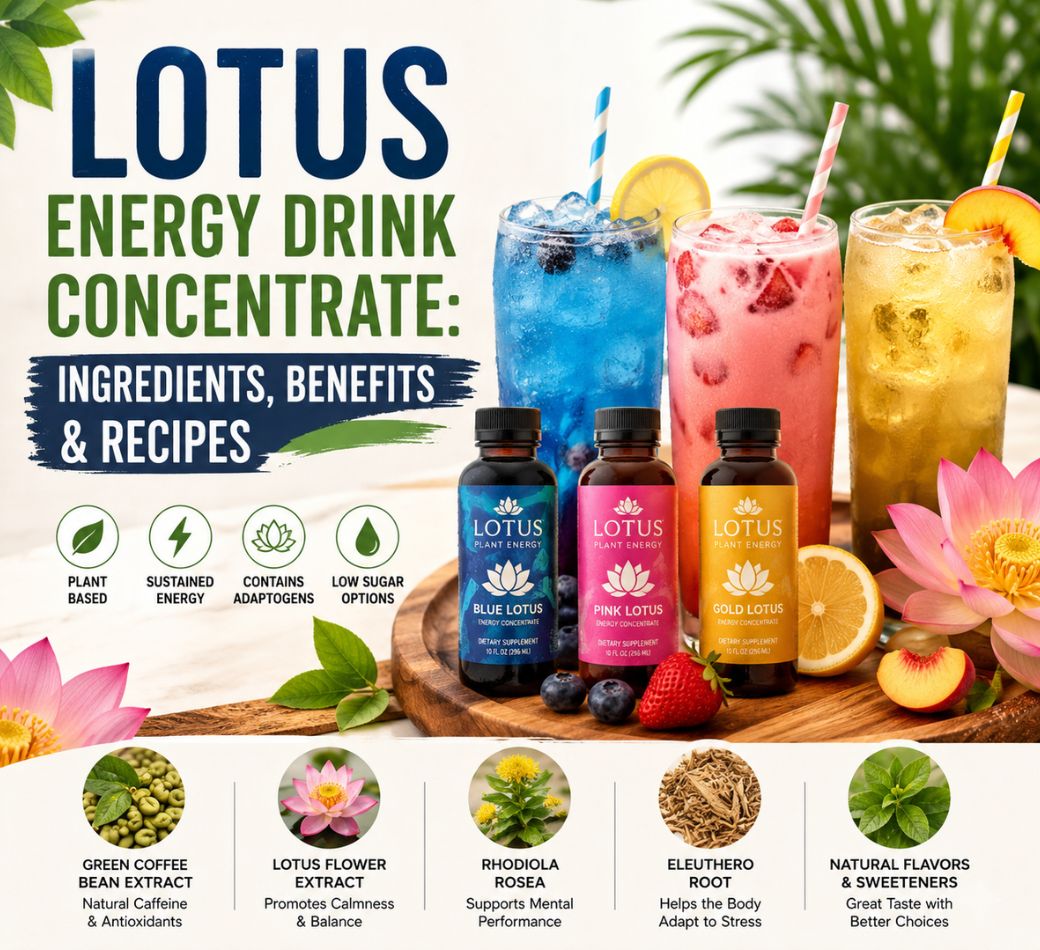
Green Coffee Bean Extract
Green coffee bean extract serves as the primary caffeine source.
Unlike roasted coffee beans, green coffee beans retain additional naturally occurring compounds. The extract provides caffeine while supporting the brand’s plant-based positioning.
Potential benefits include:
- Increased alertness
- Improved focus
- Mental energy support
- Flexible caffeine dosing
Lotus Flower Extract
Lotus flower extract helps distinguish Lotus from conventional energy drinks.
Traditional herbal practices have used lotus flowers for centuries. While modern research remains ongoing, manufacturers often include lotus flower extract as part of wellness-focused beverage formulations.
Rhodiola Rosea
Rhodiola Rosea functions as an adaptogen.
Adaptogens help the body adapt to physical and mental stressors. Many athletes, students, and professionals use Rhodiola-containing products to support focus and resilience during demanding situations.
Eleuthero Root
Eleuthero root, commonly known as Siberian ginseng, has a long history in traditional herbal medicine.
Researchers continue to study its role in supporting stamina, endurance, and overall stress adaptation.
Natural Flavors and Sweeteners
Lotus offers multiple flavor bases including:
- Blue Lotus
- Pink Lotus
- Gold Lotus
- Purple Lotus
These concentrates pair well with both traditional and sugar-free syrups.
Lotus Energy Drink Caffeine Content Explained

Caffeine remains one of the most important considerations when choosing an energy beverage.
How Much Caffeine Is in Lotus Concentrate?
The caffeine content varies based on the product line and serving size.
Because Lotus uses a concentrate system, users can control their caffeine intake more effectively than they can with standard canned energy drinks.
Always review the current product label because formulations may change over time.
How Lotus Compares to Coffee and Energy Drinks
| Beverage | Average Caffeine |
| Lotus Energy Drink | Variable |
| Brewed Coffee | 95–200 mg |
| Espresso Shot | 63 mg |
| Energy Drink Can | 80–300 mg |
| Cola Beverage | 20–50 mg |
Tips for Controlling Your Caffeine Intake
- Start with smaller servings.
- Track total daily caffeine consumption.
- Avoid combining multiple energy products.
- Stay hydrated throughout the day.
- Choose lower-caffeine recipes when necessary.
Lotus Plant Energy vs. Commercial Energy Drinks
Ingredient Comparison Table
| Ingredient Category | Lotus Energy | Standard Energy Drinks |
| Green Coffee Bean Extract | Yes | Rare |
| Adaptogens | Common | Rare |
| Artificial Ingredients | Lower | Often Higher |
| Recipe Flexibility | Excellent | None |
| Sugar-Free Options | Easy | Product Dependent |
Clean Label Benefits
Many consumers choose Lotus because they value ingredient transparency.
Common clean-label advantages include:
- Plant-derived ingredients
- Vegan-friendly options
- Gluten-free formulations
- Non-GMO positioning
Sugar and Calorie Differences
Traditional energy drinks lock consumers into a predetermined calorie and sugar level.
Lotus allows users to create:
- Sugar-free drinks
- Low-calorie recipes
- Reduced-sugar alternatives
- Hydrating energy beverages
The Energy Curve Analysis
Synthetic Energy Drinks vs. Plant-Based Lotus Blends
The following chart illustrates a hypothetical energy curve based on consumer experience reports and ingredient characteristics rather than clinical testing.
| Time | Synthetic Energy Drink | Lotus Plant-Based Blend |
| 0 Minutes | Low | Low |
| 30 Minutes | Sharp Spike | Moderate Rise |
| 60 Minutes | Peak Energy | Stable Increase |
| 120 Minutes | Decline Begins | Sustained Energy |
| 180 Minutes | Energy Crash | Gradual Taper |
| 240 Minutes | Fatigue | Mild Decline |
Many consumers report that adaptogen-infused formulas feel smoother than highly caffeinated commercial beverages.
Professional Mixology Case Study
During recipe testing, we evaluated multiple syrup combinations using Blue, Pink, and Gold Lotus concentrates.
Flavor Pairing Matrix
| Lotus Base | Best Pairing | Sugar Level | Overall Score |
| Blue Lotus | Blue Raspberry + Lemon | Low | 9.5/10 |
| Pink Lotus | Strawberry + Coconut | Medium | 9/10 |
| Gold Lotus | Peach + Mango | Medium | 9.3/10 |
Successful Flavor Pairings
Blue Lotus + Lemonade
This combination delivered the brightest flavor profile and worked exceptionally well with sparkling water.
Pink Lotus + Coconut
The coconut softened the tart fruit flavors and created a balanced tropical finish.
Gold Lotus + Peach
Gold Lotus paired naturally with peach-based syrups while maintaining a clean finish.
Failed Experiments and Lessons Learned
Several combinations performed poorly.
| Combination | Result |
| Blue Lotus + Chocolate | Flavor Clash |
| Gold Lotus + Heavy Caramel | Excessively Sweet |
| Pink Lotus + Banana Syrup | Overpowering Texture |
These results demonstrate why flavor balance matters more than simply combining popular ingredients.
The Adaptogen Deep Dive
What Are Adaptogens?
Adaptogens are plant compounds that may help the body adapt to stress.
Unlike stimulants, adaptogens do not directly increase energy levels. Instead, they may influence how the body responds to physical and mental demands.
How Rhodiola Supports Energy Management
Rhodiola may help support:
- Cognitive performance
- Mental resilience
- Focus during demanding tasks
Researchers believe Rhodiola influences stress-response pathways that affect fatigue and concentration.
How Eleuthero Supports Stress Response
Eleuthero may support:
- Physical endurance
- Recovery capacity
- Adaptation to stress
Many herbal formulations combine Eleuthero with caffeine because their effects complement one another.
The Synergy Between Adaptogens and Caffeine
Caffeine stimulates the nervous system.
Adaptogens may help regulate stress responses that accompany stimulant use.
This combination may contribute to the smoother energy experience many Lotus users describe.
Frequently Asked Questions
Is Lotus Energy Drink healthier than traditional energy drinks?
Lotus offers more customization and often contains plant-based ingredients. However, overall health impact depends on serving size, caffeine intake, and added sweeteners.
Can I make Lotus energy drinks sugar-free?
Yes. You can combine Lotus concentrate with sugar-free syrups and sparkling water.
Does Lotus contain adaptogens?
Many Lotus formulations include adaptogens such as Rhodiola Rosea and Eleuthero root.
How much caffeine should I consume daily?
Most healthy adults should stay within generally accepted daily caffeine guidelines unless a healthcare professional advises otherwise.
Which Lotus flavor is best for beginners?
Many users prefer Blue Lotus because it pairs easily with citrus and berry flavors.
Conclusion
Lotus Energy Drink Concentrate offers a flexible alternative to conventional energy drinks. Its combination of green coffee bean extract, adaptogens, customizable caffeine levels, and extensive flavor options appeals to consumers who want greater control over their energy beverages.
Whether you prefer sugar-free recipes, café-style creations, or plant-based energy drink alternatives, Lotus provides a versatile platform for experimentation. By understanding the ingredients, caffeine content, and flavor pairings, you can create drinks that match both your taste preferences and wellness goal.
Editorial Standards & Disclosure
This article relies on ingredient research, product information, industry publications, and hands-on beverage formulation analysis. The content provides educational information only and does not constitute medical advice. Always consult a qualified healthcare professional before making significant changes to your caffeine consumption or dietary routine.