

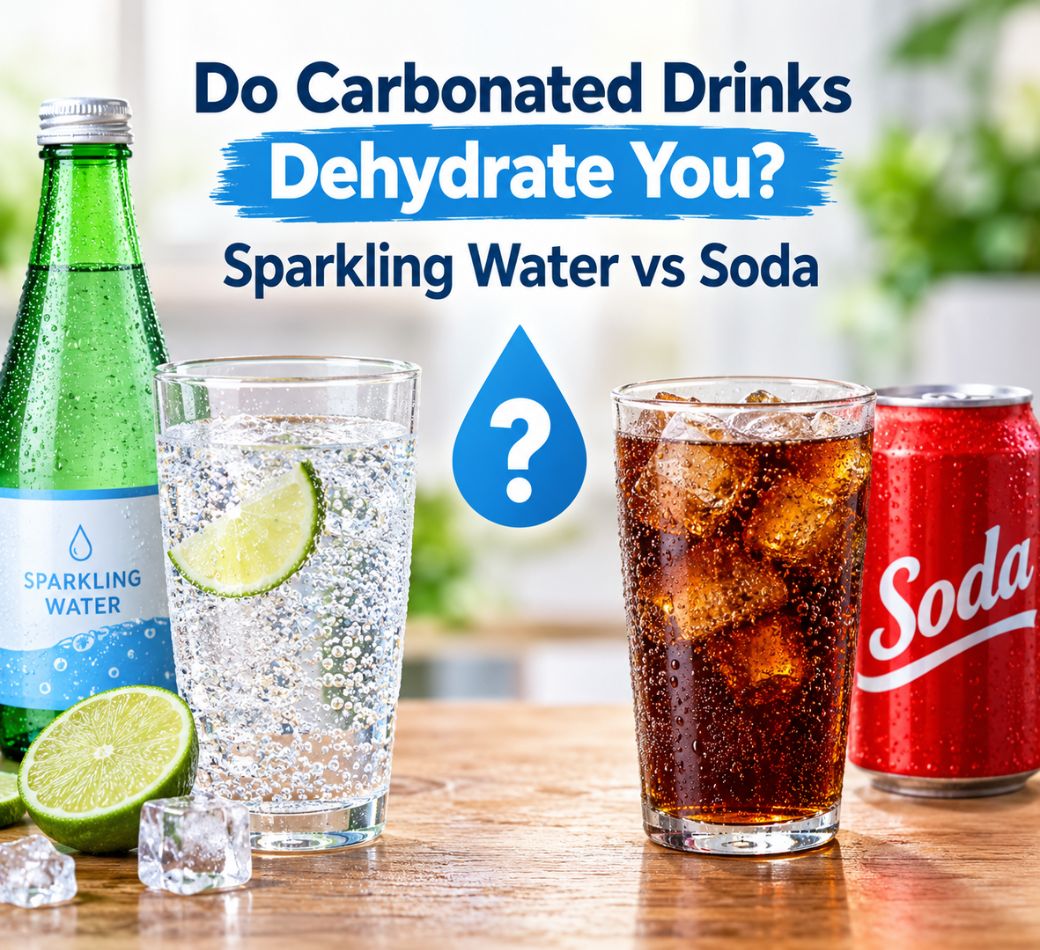
Have you ever wondered, does carbonated drinks dehydrate you, or can sparkling water keep you hydrated just like regular water? Many people avoid fizzy drinks because they believe carbonation removes water from the body. However, the answer depends on the type of drink you choose.
Plain sparkling water can help you stay hydrated because it contains water. Sugary sodas and highly caffeinated energy drinks raise different health considerations. In this guide, you will learn how carbonation affects hydration, how sparkling water compares with soda, and how to choose better drinks for your daily fluid intake.
Quick answer: Plain carbonated water generally hydrates you about as well as still water. Carbonation itself does not automatically cause dehydration. However, added sugar, caffeine, acidity, and other ingredients can affect a drink’s overall health value.
The Direct Answer: Carbonation vs. Dehydration
No, carbonated drinks do not automatically dehydrate you. Your body can absorb the water in plain sparkling water, seltzer, and other carbonated beverages.
Researchers tested 13 common beverages in a randomized trial published in the American Journal of Clinical Nutrition in 2016. The study found no significant difference in total urine output after participants drank sparkling water or several other beverages compared with still water over four hours. The researchers also developed the Beverage Hydration Index (BHI) to compare the short-term fluid-retention effects of different drinks.
You can read the original beverage hydration study for more details.
Still, you should distinguish hydration from overall nutrition. A drink may provide water while also supplying large amounts of added sugar, caffeine, or calories.
Why Carbonated Water Hydrates Just as Well as Still Water
Carbonated water contains dissolved carbon dioxide gas. Manufacturers add this gas to create the bubbles that give sparkling water its familiar fizz.
When you drink sparkling water, your digestive system processes its water content just as it does water from other beverages. Carbonation does not automatically prevent your body from absorbing that water.
Plain sparkling water can therefore help you meet your daily fluid needs. The Centers for Disease Control and Prevention (CDC) also lists sparkling water and seltzer among low- or no-calorie beverage options.
However, you may experience bloating, belching, or stomach discomfort after drinking carbonated water. If these symptoms make you drink less, still water may work better for you.
The Beverage Hydration Index (BHI): Ranking Fizzy Drinks
The Beverage Hydration Index measures how much urine people produce after consuming a beverage compared with a reference drink, usually still water. Researchers use it to study short-term fluid retention under specific conditions.
However, the BHI does not provide a universal score for every brand or flavor of carbonated drink. You should not assume that all sparkling waters, diet sodas, and sugary sodas have the same hydration value.
How Different Carbonated Drinks Compare
| Beverage | Can it contribute to hydration? | What should you consider? |
|---|---|---|
| Plain sparkling water | Yes | A useful alternative to still water |
| Unflavored seltzer | Yes | Check that it contains no added sugar |
| Club soda | Yes | Check the sodium content if you limit salt |
| Sparkling mineral water | Yes | Mineral content varies by brand |
| Diet soda | Yes | Check caffeine, acidity, and sweeteners |
| Regular soda | Yes | Often contains substantial added sugar |
| Tonic water | Yes | Usually contains added sugar unless labeled otherwise |
| Caffeinated energy drinks | Yes, they provide fluid | Check caffeine levels, sugar, and other stimulants |
Important: This table compares general beverage characteristics, not exact hydration scores. The 2016 BHI study did not establish a universal score for every drink on the market.
Plain water remains an excellent everyday choice because it provides fluid without added sugar or caffeine.
Why Do People Think Sparkling Drinks Dehydrate You?
People often confuse carbonation with the effects of caffeine, sugar, and other beverage ingredients. The bubbles may cause discomfort, but they do not automatically cause the body to lose more water than it receives.
Three factors help explain this misunderstanding.
The Effect of Carbonation on Stomach Comfort
Carbonated drinks release carbon dioxide in your digestive tract. This gas can increase belching, bloating, and the feeling of fullness.
Some people find sparkling water more satisfying than still water, while others prefer it because the bubbles make drinking more enjoyable. Individual responses vary.
Researchers have not established that carbonation consistently makes people drink 15–20% less water per hour. Avoid treating that figure as a proven result without a reliable study that directly supports it.
If sparkling water makes you uncomfortable, drink smaller amounts at a time or choose still water.
The Role of Sugar and Fluid Balance
Regular soda often contains substantial added sugar. For example, the CDC reports that a 12-ounce regular soda can contain more than 10 teaspoons of added sugar.
Sugar does not mean that a drink cannot provide fluid. Your body still receives water when you drink soda. However, frequent consumption of sugary beverages can increase your calorie and added-sugar intake.
High sugar concentrations can also affect how quickly the stomach empties and how the body handles fluids. The exact effect depends on the drink’s composition and the situation in which you consume it.
Choose plain sparkling water more often if you want hydration without added sugar. You can also read the CDC’s guide to healthier drinks.
Does Caffeine in Carbonated Soda Cause Dehydration?
Caffeine can increase urine production, especially when someone consumes a large amount or does not regularly consume caffeine. However, ordinary caffeinated beverages still contribute fluid.
The caffeine content varies by product. Some colas contain caffeine, while many caffeine-free sodas and plain sparkling waters do not.
Do not use a single caffeine threshold as a guaranteed point at which dehydration begins. Your response depends on your caffeine intake, tolerance, activity, and overall fluid balance.
For most healthy adults, the CDC states that moderate caffeine intake of up to 400 mg per day can fit within a healthy diet. That figure does not apply to everyone, and individual products can contain very different amounts.
If you experience a racing heartbeat, anxiety, or sleep problems after consuming caffeine, consider reducing your intake and seeking medical advice when appropriate.
Sparkling Water, Seltzer, Club Soda, and Tonic Water: What’s the Difference?
These drinks all contain water and carbonation, but manufacturers use different ingredients to make them.
Sparkling Water
Sparkling water contains dissolved carbon dioxide. Some brands add natural minerals, while others add flavorings. Plain, unsweetened sparkling water can help you stay hydrated.
Seltzer Water
Seltzer usually consists of water and added carbon dioxide. Flavored versions may contain natural flavors or other ingredients. Read the label to check for added sugar.
Club Soda
Club soda contains carbon dioxide and added minerals or salts. These ingredients give it a slightly different taste from ordinary seltzer.
If your healthcare professional has advised you to limit sodium, check the nutrition label before choosing club soda regularly.
Tonic Water
Tonic water contains quinine and often includes added sugar or sweeteners. It may look similar to sparkling water, but it does not offer the same nutritional profile.
Check the ingredient list and nutrition label before choosing tonic water as your everyday drink.
Is Sparkling Water as Hydrating as Plain Water?
Yes, plain sparkling water generally contributes to hydration in a similar way to still water. Both supply water that your body can use.
The best choice often comes down to comfort and preference. Some people drink more water when they choose sparkling water, while others prefer still water because carbonation causes bloating.
Use the following tips to make a practical choice:
- Choose unsweetened sparkling water for a low-calorie option.
- Alternate between sparkling and still water if carbonation causes discomfort.
- Check labels for added sugar, sodium, caffeine, and acids.
- Drink additional fluids when heat, exercise, fever, vomiting, or diarrhea increases your needs.
- Do not rely on soda or energy drinks as your main source of hydration.
For most everyday situations, plain drinking water offers a simple and reliable way to meet your fluid needs.
Side Effects of Drinking Too Much Carbonated Water
Plain carbonated water can fit into a healthy routine, but some people experience discomfort when they drink it frequently or in large amounts.
Bloating and Gas
Carbon dioxide can increase belching and abdominal fullness. Drink more slowly or switch to still water if these symptoms bother you.
Tooth Enamel Concerns
Carbonation creates carbonic acid, which makes sparkling water more acidic than still water. Plain sparkling water generally presents less concern for tooth enamel than many sugary or acidic soft drinks, but the risk depends on the beverage’s acidity and how often you expose your teeth to it.
Flavored sparkling waters may contain additional acids, such as citric acid, which can increase the risk of enamel erosion.
The American Dental Association recommends limiting frequent exposure to acidic drinks. You can reduce contact with your teeth by drinking them with meals, avoiding prolonged sipping, and rinsing your mouth with plain water afterward.
Read the ADA’s guidance on sparkling water and tooth protection.
Acid Reflux and Stomach Discomfort
Pay attention to your symptoms. If sparkling water consistently makes you uncomfortable, choose still water and discuss persistent symptoms with a healthcare professional.
How to Choose the Best Carbonated Drink for Hydration
Your best choice depends on your health needs, taste preferences, and the ingredients in the drink.
- For everyday hydration: Choose plain still water or unsweetened sparkling water.
- For less added sugar: Replace regular soda with plain sparkling water or an unsweetened flavored option.
- For lower caffeine intake: Check labels and choose caffeine-free beverages when appropriate.
- For sodium restriction: Compare mineral water and club soda labels.
- During heavy exercise or illness: Consider your fluid and electrolyte needs. If you have significant vomiting or diarrhea, use an appropriate oral rehydration solution and seek medical advice when needed.
Remember that no single beverage works best for every person or every situation.
Frequently Asked Questions
1. Does carbonated drinks dehydrate you?
No. Plain carbonated water provides fluid and generally hydrates you about as well as still water. Added ingredients can affect a drink’s overall nutritional value.
2. Do sparkling drinks cause dehydration?
Plain sparkling water does not normally cause dehydration. Sugary or caffeinated sparkling drinks also supply fluid, but you should consider their sugar and caffeine content.
3. Is carbonated water as hydrating as plain water?
Yes. Research suggests that sparkling water can contribute to hydration similarly to still water under the conditions studied. Your comfort and drinking habits may determine which option works best for you.
4. Does soda dehydrate you more than water?
Soda provides fluid, so you should not automatically classify it as dehydrating. However, regular soda often contains substantial added sugar, and caffeinated versions also supply caffeine. Plain water remains a better everyday choice for most people.
5. Does flavored sparkling water dehydrate you during exercise?
Unsweetened flavored sparkling water can contribute fluid during exercise. However, carbonation may cause discomfort for some people. During prolonged or intense exercise, your needs may also depend on heat, sweat loss, and electrolyte replacement.
6. Does diet soda dehydrate you because of artificial sweeteners?
Artificial sweeteners do not automatically make diet soda dehydrating. Diet soda provides fluid, but its caffeine content and acidity vary. Check the label and choose water regularly.
7. Does sparkling water count toward daily fluid intake?
Yes. Plain sparkling water contributes to your daily fluid intake. Your total needs depend on factors such as activity, climate, age, and health.
8. Is club soda better than seltzer for hydration?
Neither drink automatically hydrates you better in everyday conditions. Club soda may contain added minerals or sodium, while seltzer usually contains water and carbon dioxide. Check the label if you need to limit sodium.
9. Can drinking too much carbonated water cause problems?
Some people experience bloating, belching, or reflux symptoms. Plain sparkling water can still fit into a balanced routine, but switch to still water if carbonation causes discomfort.
10. What is the healthiest fizzy drink?
Plain, unsweetened sparkling water is a strong everyday option because it supplies fluid without added sugar or caffeine. You should also consider acidity and your individual health needs.
Conclusion
So, does carbonated drinks dehydrate you? In general, no. Plain sparkling water and seltzer can hydrate you much like still water, and carbonation alone does not automatically cause fluid loss.
However, regular soda, tonic water, and caffeinated fizzy drinks contain ingredients that may affect your overall health choices. Check labels, limit added sugar, and choose drinks that suit your needs.
For everyday hydration, keep plain water or unsweetened sparkling water as your main choices. If carbonation causes bloating or reflux, switch to still water and drink fluids regularly throughout the day.
References
- Maughan RJ, et al. A randomized trial to assess the potential of different beverages to affect hydration status: development of a beverage hydration index. American Journal of Clinical Nutrition, 2016. Read the study on PubMed.
- Centers for Disease Control and Prevention. About Water and Healthier Drinks.
- American Dental Association. Sparkling Water Habits to Protect Teeth.