

Quick Answer: A neat drink contains a single serving of liquor poured directly into a glass without ice, water, or a mixer. Bartenders typically serve whiskey, bourbon, scotch, and other spirits neat at room temperature. If you want to taste a spirit’s original aroma and flavor, ordering it neat offers a simple way to enjoy it.
When you visit a bar, you might hear terms such as neat, straight up, and on the rocks. These phrases describe different ways to prepare and serve drinks, but they do not mean the same thing. Understanding the differences helps you order confidently and get the drink you actually want.
In this guide, you’ll learn what neat means in a drink, how it compares with other bartending terms, which spirits work best neat, and how to order one without confusion.
Quick Answer: What Is a “Neat” Drink?
A neat drink contains liquor poured straight from the bottle into a glass without ice, chilling, water, or other ingredients. Bartenders generally serve it at room temperature, which allows you to explore the spirit’s natural aroma and flavor.
For example, if you order a bourbon neat, the bartender pours bourbon directly into a glass without adding ice or a mixer.
People often choose neat pours when they want to appreciate the character of a spirit, including its aroma, sweetness, spice, oak, and finish.
Keep these three facts in mind:
- No ice: The bartender pours the spirit directly into your glass.
- No mixer: The drink contains only the spirit unless you request an addition.
- Room temperature: A neat pour normally arrives unchilled.
A neat drink can contain whiskey, rum, gin, tequila, brandy, or another spirit. The serving style describes how the bartender prepares the drink, not which liquor you choose.
Neat vs. Straight Up vs. On the Rocks: What’s the Difference?
The main difference between neat, up, and on the rocks comes down to temperature, ice, and preparation.
| Serving style | Ice in the glass? | Temperature | Preparation |
|---|---|---|---|
| Neat | No | Usually room temperature | Pour the spirit directly into the glass |
| Up | No | Chilled | Chill the drink with ice, then strain it |
| Straight up | No | Chilled | Usually the same as up, especially for cocktails |
| On the rocks | Yes | Chilled by ice | Pour the drink over ice |
These terms help you communicate your preference clearly. However, local bar practices can vary, so ask the bartender if you need a specific preparation.
What Does “Neat” Mean?
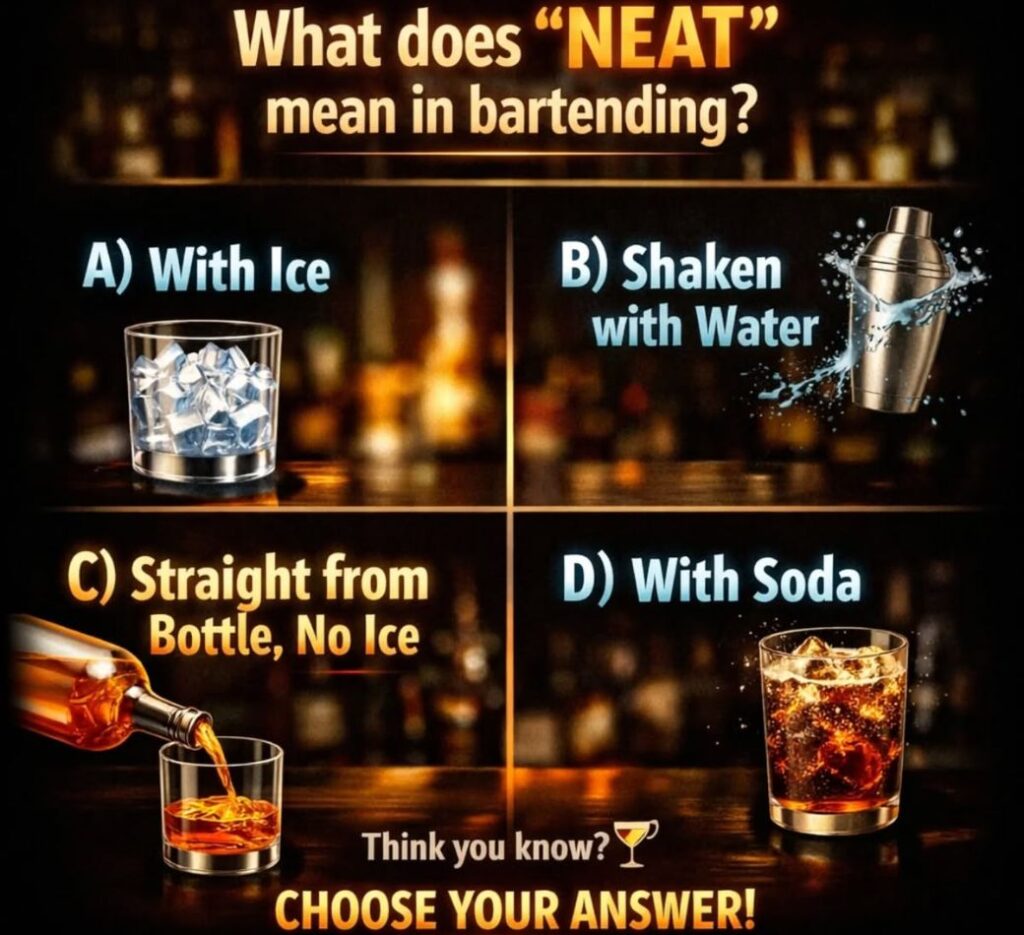
When you order a drink neat, you ask the bartender to pour the spirit directly into a glass without adding ice, water, or mixers.
For example, you can say, “I’d like a single malt scotch neat, please.”
The bartender pours the scotch into a suitable glass and serves it without chilling or dilution. You can then smell the spirit before taking a small sip.
Many whiskey enthusiasts prefer this method because it lets them explore the spirit’s original character. However, you can add a few drops of water yourself if the alcohol feels too strong or masks subtle flavors.
What Does “Up” or “Straight Up” Mean?
A drink served up starts with ice during preparation, but the bartender strains out the ice before serving it.
Bartenders commonly use this technique for cocktails such as martinis and Manhattans. They stir or shake the ingredients with ice to chill the drink, then strain the liquid into a serving glass.
The phrase straight up generally means the same thing as up in cocktail bars.
For example, a gin martini served straight up arrives chilled in a stemmed cocktail glass without ice. Unlike a neat pour, the drink usually contains multiple ingredients.
Neat vs. straight up difference: Neat means the bartender pours an unchilled spirit directly into a glass. Straight up means the bartender chills a drink with ice and removes the ice before serving it.
If you want whiskey without ice and without chilling, order it neat rather than straight up.
What Does “On the Rocks” Mean?
Ordering a drink on the rocks means you want the bartender to serve it over ice.
The ice cools the drink and gradually melts, adding water and reducing the spirit’s alcohol concentration. This dilution can soften intense alcohol notes and change the flavors you notice as you sip.
For example, a bourbon on the rocks arrives in a glass with bourbon and ice. You can choose this style when you prefer a colder, more refreshing drink.
Bartenders often use a rocks glass, also called a lowball or old-fashioned glass, for this serving style.
What Is a “Twist” in a Drink?
A twist is a thin strip of citrus peel that a bartender uses as a garnish. The peel usually comes from a lemon or orange.
Bartenders often express the peel over the drink by gently squeezing or twisting it to release aromatic citrus oils. They may then place the peel in the glass or rest it on the rim.
A twist adds aroma without introducing the full juice of the fruit. It can complement whiskey, martinis, and other cocktails.
Common examples include:
- Lemon twist: Adds a fresh, bright citrus aroma.
- Orange twist: Adds a sweeter, warmer citrus aroma.
- Grapefruit twist: Adds a sharper, slightly bitter citrus aroma.
If you want a neat whiskey with a citrus garnish, specify your preference because a neat pour does not automatically include a twist.
The “Neat” Order Cheat Sheet: Quick Reference Guide
Use this comparison table to remember the most common bartending terms.
| Bartending term | What you get | Typical glass | Best for |
|---|---|---|---|
| Neat | Spirit without ice or mixers | Glencairn or rocks glass | Exploring a spirit’s aroma and flavor |
| Up | Chilled drink without ice in the serving glass | Cocktail or coupe glass | Martinis and other chilled cocktails |
| On the rocks | Drink served over ice | Rocks or lowball glass | Cooler, gradually diluted spirits |
| With a splash of water | Spirit plus a small amount of water | Tasting or rocks glass | Opening up intense aromas |
| With a twist | Drink garnished with citrus peel | Depends on the drink | Adding a citrus aroma |
| As a shot | A measured serving intended for quick consumption | Shot glass | Drinking a small serving in one go |
Choose Your Drink Style
Follow this simple decision guide to choose the right bartending term.
- Do you want ice in your glass?
- Yes: Order your drink on the rocks.
- No: Continue to the next question.
- Do you want the drink chilled?
- Yes: Ask for it up or straight up if the bartender can prepare it that way.
- No: Order it neat if you want only the spirit.
- Do you want to soften the alcohol’s intensity?
- Ask for a small splash of water or request a separate glass of water.
- If you prefer a cold drink, choose the rocks style.
Remember that up often describes cocktails rather than a simple pour of liquor. Tell the bartender what you want if you have a specific serving temperature in mind.
What Spirits Should You Order Neat?
You can order almost any spirit neat, but some varieties particularly reward slow sipping. Look for spirits with flavors and aromas that you want to explore without mixers.
1. Single Malt Scotch Whisky
Single malt scotch can offer flavors of fruit, honey, vanilla, dried fruit, smoke, and oak. Different distilleries and maturation methods create distinct flavor profiles.
Try a small neat pour when you want to explore these characteristics. If the alcohol feels too intense, add a few drops of water and compare the aroma.
2. Bourbon Whiskey
Bourbon often features vanilla, caramel, toasted oak, and baking spice. These flavors come from the whiskey’s ingredients, fermentation, distillation, and aging process.
A neat pour makes it easier to explore these characteristics. You can also try the same bourbon on the rocks to see how chilling and dilution change your experience.
3. Irish Whiskey
Many Irish whiskeys offer approachable flavors of fruit, grain, vanilla, and gentle spice. Their individual profiles vary, so taste a small pour before deciding whether you prefer them neat or with water.
4. Reposado Tequila
Reposado tequila spends time aging in oak containers, which can contribute notes of vanilla, spice, and wood alongside the agave character.
Order a quality reposado neat in a suitable tasting glass when you want to explore its aroma. You do not need salt and lime to enjoy it this way.
5. Aged Rum
Aged rum can offer flavors such as caramel, molasses, dried fruit, vanilla, and oak. A neat pour lets you explore the balance between the rum’s sweetness, alcohol, and aging character.
Choose a rum intended for sipping rather than assuming every rum will taste best neat.
Tip: Price alone does not determine whether a spirit deserves a neat pour. Choose a drink that suits your taste, and feel free to add water or ice whenever you prefer.
How Much Is a Neat Pour? Standard Pour Sizes in Ounces
The term neat describes the serving method, not a universal pour size.
Many American bars use 1.5 ounces as a standard serving of spirits, while some establishments pour 2 ounces. Other venues may use different measures depending on their menu, pricing, and local regulations.
| Pour size | Approximate milliliters | What it means |
|---|---|---|
| 1 oz | 29.6 mL | Small pour |
| 1.5 oz | 44.4 mL | Common American standard serving |
| 2 oz | 59.1 mL | Larger serving at many bars |
Always check the menu or ask your bartender about the serving size. A neat pour does not automatically mean a double.
A double refers to a larger quantity of liquor, often twice the house’s standard serving. A neat pour refers to the absence of ice and mixers. You can order a single or double neat, depending on the bar’s options.
How to Properly Order a Neat Drink at a Bar Without Confusion
You do not need specialist knowledge to order a neat drink. Use a clear sentence that names the spirit and serving style.
Step 1: Name the Spirit
Tell the bartender which liquor you want. For example:
- “I’d like bourbon.”
- “Can I get a single malt scotch?”
- “I’ll have reposado tequila.”
If you have a particular brand in mind, name it as well.
Step 2: Say “Neat”
Add the word neat to your order.
For example, say, “I’d like a bourbon neat, please.”
This tells the bartender to pour the spirit directly into a glass without ice or mixers.
Step 3: Specify the Pour Size
If the bar offers different serving sizes, request the amount you want.
For example:
- “A single bourbon neat, please.”
- “A two-ounce pour of scotch, neat, please.”
Ask about the price before ordering an unfamiliar or premium spirit.
Step 4: Request Water Separately if You Want It
Some bars serve a glass of water alongside a neat spirit. If you want water to sip or add to the whiskey, simply ask.
For example, say, “Could I have a glass of water on the side?”
This lets you control how much water you add.
Step 5: Clarify Your Temperature Preference
A standard neat pour arrives unchilled. If you want a cold spirit without ice in the glass, explain your preference.
You could ask, “Could you chill the spirit and strain it without ice?”
Not every bar offers this preparation, and some bartenders may interpret the request differently. Explaining the result you want helps avoid confusion.
What About the Cost of Ordering Neat?
Bars do not always charge extra for a neat pour. Many establishments charge the same price for the same quantity of liquor, whether you order it neat or on the rocks.
However, prices can vary by venue. A premium pour, a double, or a special preparation may cost more. Ask about the serving size and price if the menu does not explain them clearly.
Neat vs. Shot: What’s the Difference?
A neat drink and a shot can contain the same spirit and even the same amount of liquor, but they describe different serving intentions.
A neat drink focuses on how the bartender serves the spirit: without ice, water, or mixers. You usually sip it slowly to explore its aroma and flavor.
A shot focuses on a measured serving that people typically consume quickly. Bartenders often serve shots in small shot glasses, although glassware and serving sizes vary.
For example, a bartender might pour 1.5 ounces of bourbon neat into a tasting glass. Another bartender might serve 1.5 ounces of bourbon as a shot. The quantity can match even though the serving styles differ.
What Is a Water Back With a Neat Drink?
A water back is a separate glass of water that accompanies a spirit. The bartender serves the water alongside the main drink rather than mixing it into the liquor.
You can sip the water between tastes or add a little to your whiskey if you want to explore how water changes its aroma and flavor.
For example, you might order, “A scotch neat with a water back, please.”
This request means you want the scotch without ice or mixers and a separate glass of water on the side.
What Does “Pickleback” Mean?
A pickleback typically consists of a shot of whiskey followed by a shot of pickle brine. People drink the pickle brine immediately after the whiskey.
The pickleback differs from a neat drink because it describes a two-part drinking ritual rather than the preparation of a single spirit pour.
If you order whiskey neat, the bartender does not automatically serve pickle brine. Ask for a pickleback specifically if that is what you want.
Best Glassware for Neat Drinks
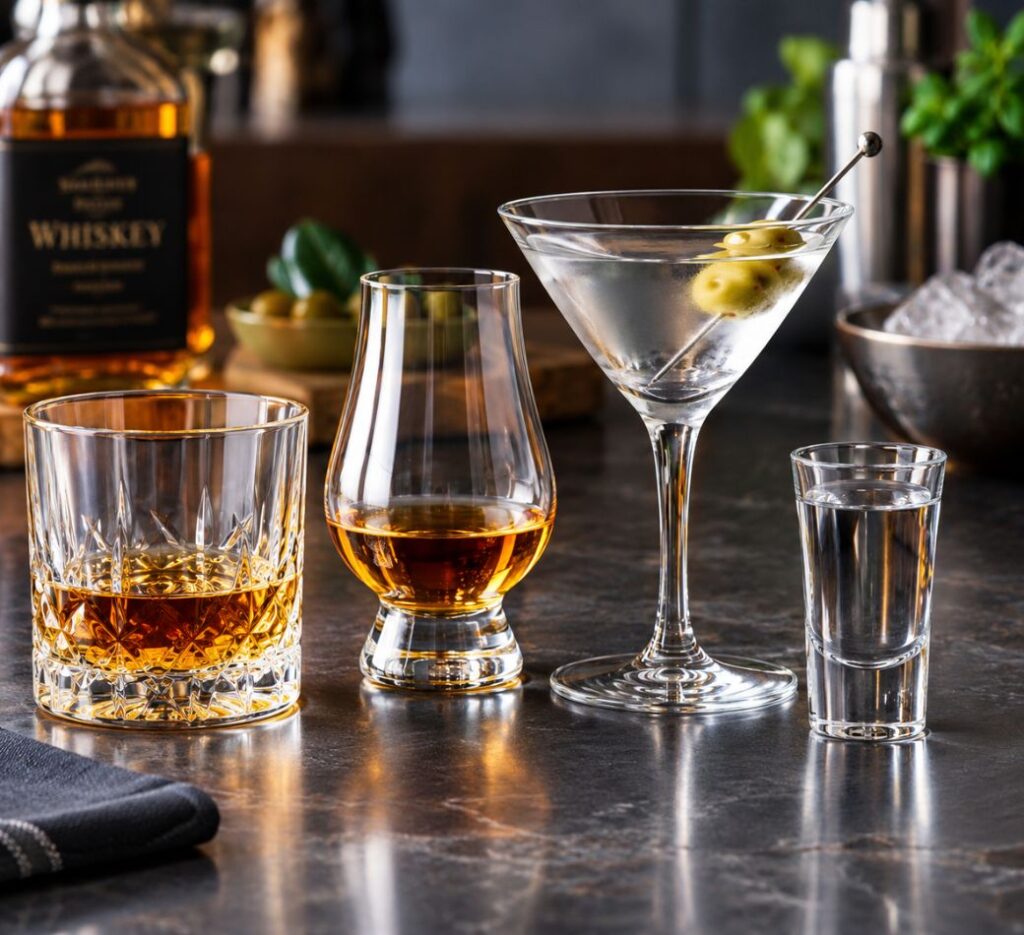
The right glass can make a neat pour easier to smell, sip, and appreciate. You do not need expensive glassware, but different shapes offer different advantages.
Glencairn Glass
A Glencairn glass features a rounded bowl and a narrower opening. The shape helps concentrate aromas near the rim, making it popular for whisky tasting.
Choose this glass when you want to explore the aroma of a single malt, bourbon, or another sipping spirit.
Rocks Glass or Lowball Glass
A rocks glass has a broad opening and a sturdy base. Bartenders commonly use it for neat spirits and drinks served over ice.
This glass works well when you prefer a simple, versatile serving vessel or want room for a large ice cube.
Copita or Tasting Glass
A copita-style tasting glass has a narrower opening that helps direct aromas toward your nose. Some tasters prefer this style when comparing different spirits.
Choose whichever glass feels comfortable. The glass can influence how you experience the aroma, but it does not change the spirit’s underlying composition.
Does Temperature Change the Taste of a Neat Drink?
Temperature can affect how you perceive a spirit’s aroma, alcohol intensity, and flavor. A neat pour normally arrives at room temperature, while ice chills a drink and gradually dilutes it.
When ice melts, it adds water to the spirit and lowers its alcohol concentration. Chilling also changes how readily certain aroma compounds reach your nose.
A neat whiskey may initially seem more intense because it contains no added ice or water. Adding a little water can soften that sensation and help some aromas stand out.
Should You Add Water to High-Proof Whiskey?
Try these steps:
- Smell the whiskey before adding water.
- Take a small sip.
- Add a few drops of water if you want to soften the alcohol sensation.
- Smell and taste it again to compare the changes.
You do not need to follow a fixed rule that says every whiskey above 100 proof requires water. Taste the spirit and decide what works for you.
Does Ice Hide Whiskey Flavors?
Ice does not simply remove flavor. It changes the drink’s temperature and gradually dilutes it, which can make some aromas less noticeable and others e
Frequently Asked Questions (FAQs)
Does neat mean a shot?
No. Neat describes a spirit served without ice, water, or mixers. A shot describes a measured serving that people generally drink quickly. A neat pour can contain the same amount of liquor as a shot, but people typically sip it.
Is a neat drink cold?
No. A bartender normally serves a neat drink at room temperature without ice or prior chilling. If you want a cold drink without ice in the glass, ask the bartender to chill and strain the spirit.
Why do bars charge extra for neat pours?
Bars do not necessarily charge extra for neat pours. Many charge the same price for the same quantity of liquor regardless of whether you order it neat or on the rocks. A larger serving, premium spirit, or special preparation may increase the price.
What does neat mean when ordering whiskey?
Ordering whiskey neat means asking the bartender to pour whiskey directly into a glass without ice, water, or mixers. The bartender normally serves it unchilled so you can explore its aroma and flavor.
What is the difference between neat and straight up?
A neat drink contains an unchilled spirit poured directly into a glass. A drink served straight up has usually been chilled with ice and strained into a glass without ice. The terms describe different preparation methods.
What does on the rocks mean?
On the rocks means the bartender serves the drink over ice. The ice chills the spirit and gradually adds water as it melts.
How many ounces are in a neat pour?
A neat pour does not have one universal size. Many American bars use 1.5 ounces, while others use 2 ounces or another house measure. Ask your bartender about the serving size.
Can I order tequila neat?
Yes. You can order blanco, reposado, or añejo tequila neat. A suitable tasting glass helps you explore the tequila’s aroma and flavor without adding mixers.
Can I add water to a neat whiskey?
Yes. You can add a few drops of water to a neat whiskey whenever you want to adjust its intensity. You can also ask for a separate glass of water so you can experiment at your own pace.
What does a twist mean when ordering a drink?
A twist means a strip of citrus peel, usually lemon or orange, that adds aromatic oils to a drink. Tell the bartender which citrus garnish you prefer if you have a specific choice.
Is neat more expensive than on the rocks?
Not always. Many bars charge the same price for an equal quantity of liquor served neat or over ice. Check the menu or ask about the price and pour size before ordering.
Conclusion
Understanding what neat means in a drink helps you order spirits confidently and enjoy them the way you prefer. A neat drink contains liquor poured directly into a glass without ice, water, or mixers, while a drink served up arrives chilled and strained, and a drink on the rocks comes with ice.
When you order whiskey neat, start with a small sip and explore its aroma and flavor. Add a few drops of water if you prefer a softer taste, or choose ice when you want a colder drink.
The most important rule is simple: tell your bartender what you want. Whether you prefer bourbon, scotch, tequila, or rum, you can choose the serving style that suits your taste.