

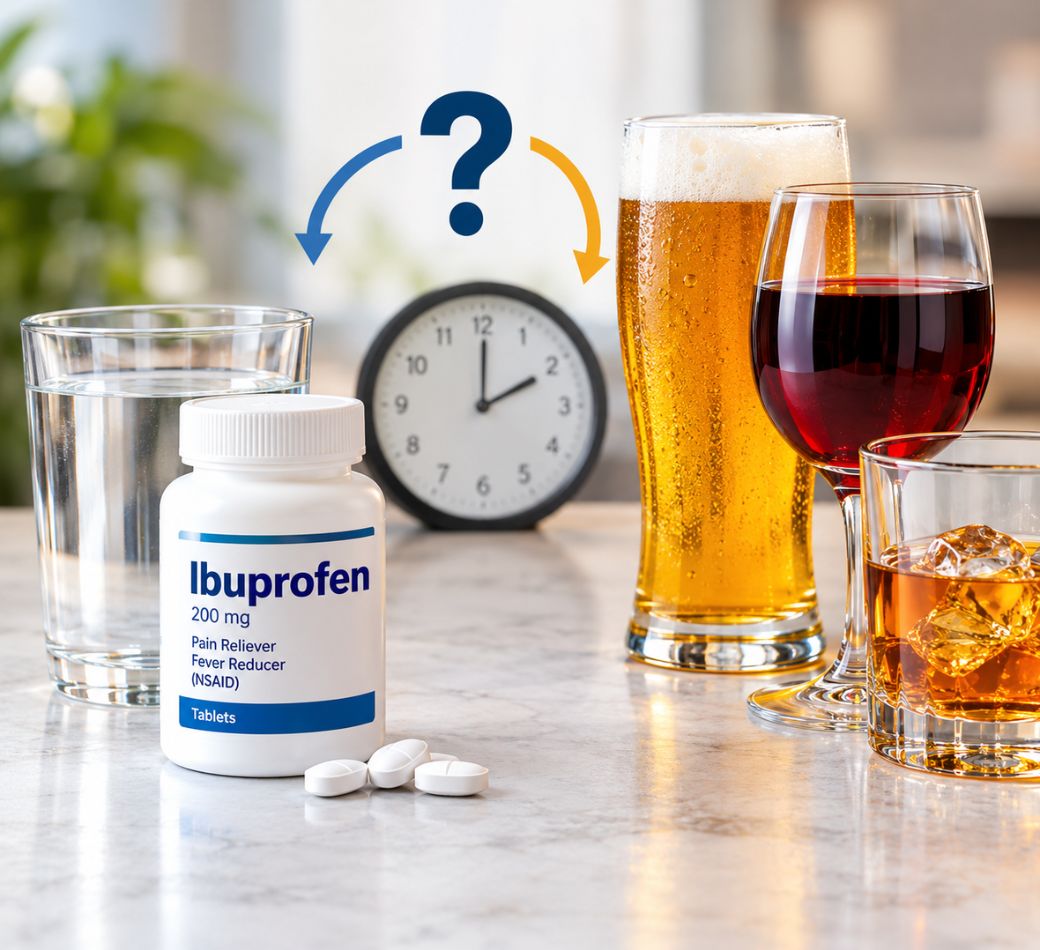
If you take ibuprofen and plan to drink alcohol later, you may wonder how long you should wait. The answer depends on your dose, how often you use ibuprofen, how much alcohol you plan to drink, and your overall health.
Ibuprofen belongs to a group of medicines called nonsteroidal anti-inflammatory drugs (NSAIDs). It can relieve pain, reduce inflammation, and lower fever. However, alcohol can increase some of the side effects associated with NSAIDs, particularly stomach irritation and gastrointestinal bleeding.
For that reason, you should avoid combining ibuprofen and alcohol when possible, especially if you take high doses, use ibuprofen regularly, or have factors that increase your risk of stomach bleeding or kidney problems.
How Long After Taking Ibuprofen Can You Drink Alcohol?
There is no single medically proven waiting period that guarantees alcohol will be safe after ibuprofen.
For a healthy adult who takes an occasional, standard over-the-counter dose, the immediate drug interaction may be less concerning than it would be with repeated high doses or heavy alcohol use. However, avoiding alcohol until you no longer need ibuprofen provides the more cautious approach.
Ibuprofen has a relatively short elimination half-life, generally around two hours, but the fact that the drug leaves the bloodstream does not mean all potential side effects disappear at the same moment.
Your risk also changes depending on how much alcohol you drink and whether you have other risk factors.
Why You Should Not Rely Only on an “8-Hour Rule”
You may see advice online recommending six, eight, 12, or 24 hours. These numbers can make the decision sound more precise than medical evidence allows.
The safer approach considers:
- Your ibuprofen dose
- Whether you take ibuprofen occasionally or every day
- The amount of alcohol you plan to drink
- Your age
- A history of ulcers or gastrointestinal bleeding
- Kidney disease
- Liver disease
- Other medicines you take
- Your level of hydration
The FDA warns that alcohol use can increase the risk of stomach bleeding associated with NSAIDs, particularly when other risk factors also exist.
Why Do Ibuprofen and Alcohol Create Risks?
Ibuprofen and alcohol can affect your body in different ways, but their effects can overlap.
1. Stomach Irritation and Bleeding
Ibuprofen can irritate the digestive tract and increase the risk of ulcers and gastrointestinal bleeding. Alcohol can also irritate the stomach lining.
NIAAA specifically advises caution with ibuprofen before or after drinking because both alcohol and ibuprofen can increase stomach irritation.
The FDA also identifies alcohol use as a factor that can increase gastrointestinal bleeding risk during NSAID treatment.
Watch for warning signs such as:
- Black or tarry stools
- Vomiting blood
- Vomit that looks like coffee grounds
- Severe or persistent stomach pain
- Fainting or unusual weakness
- Significant dizziness
Seek urgent medical care if you develop signs of gastrointestinal bleeding.
2. Kidney Stress
Your kidneys help regulate fluid and remove waste from your body. NSAIDs can affect kidney function, particularly in people who already have kidney problems or become dehydrated.
Alcohol can contribute to dehydration, especially when you drink heavily or experience vomiting.
This combination can become more concerning if you:
- Drink heavily
- Take high doses of ibuprofen
- Take ibuprofen frequently
- Have kidney disease
- Take medicines that affect kidney function
- Become significantly dehydrated
3. Higher Risk With Larger Amounts of Alcohol
A small amount of alcohol does not create the same exposure as heavy drinking.
The FDA’s OTC ibuprofen labeling specifically identifies regular consumption of three or more alcoholic drinks per day as a factor that increases stomach-bleeding risk.
That does not mean fewer drinks automatically make the combination risk-free. Your personal health and medication use still matter.
Ibuprofen Half-Life: How Long Does It Stay in Your System?
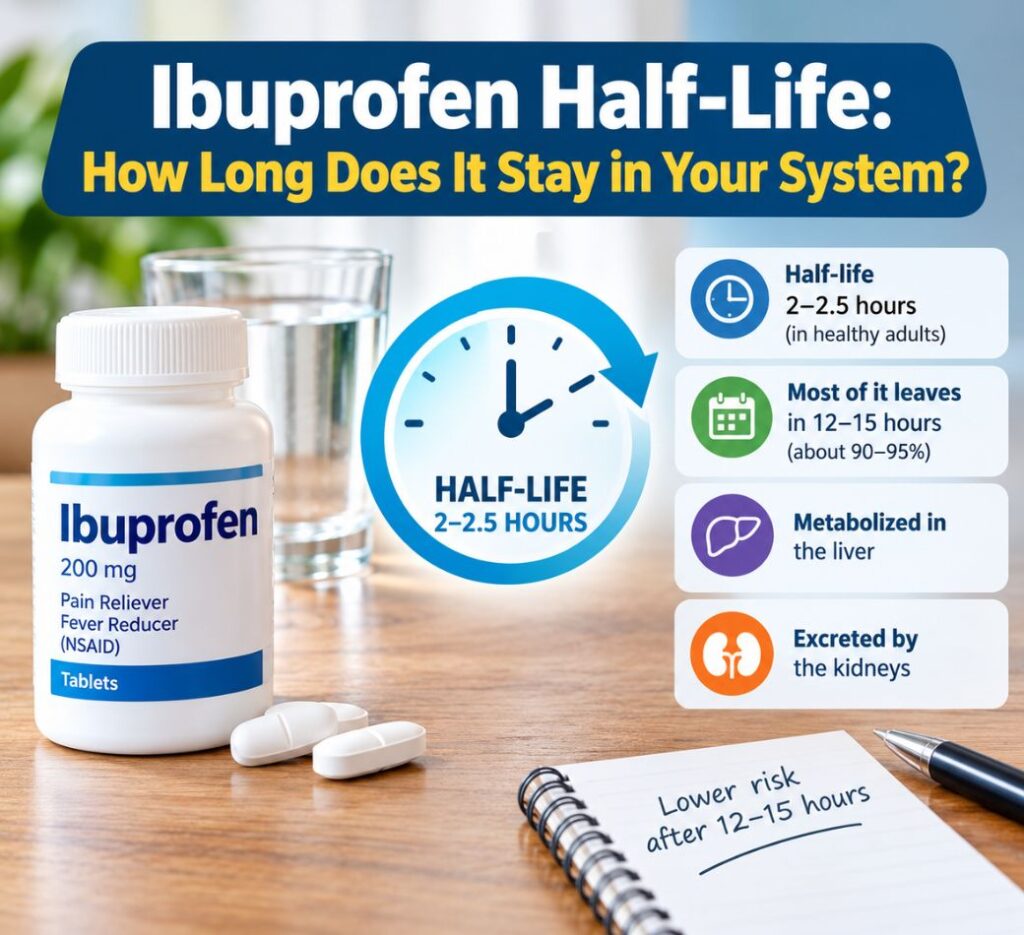
Ibuprofen has a relatively short half-life, commonly reported at about two hours in healthy adults.
Your body gradually removes the medicine from your bloodstream after you take a dose. However, you should not use the half-life alone to calculate an exact “safe drinking time.”
Several factors can change the risk associated with drinking after ibuprofen, including:
| Factor | Why It Matters |
|---|---|
| Ibuprofen dose | Higher doses can increase adverse-effect risk |
| Frequency of use | Repeated use increases exposure |
| Alcohol amount | More alcohol can increase stomach and other health risks |
| Ulcer history | Previous ulcers increase bleeding risk |
| Age | Older adults face greater NSAID-related bleeding risk |
| Kidney disease | NSAIDs can pose greater kidney risks |
| Other medicines | Blood thinners, steroids, and some other drugs can increase bleeding risk |
| Dehydration | Can increase kidney stress |
So, drug clearance and risk clearance are not exactly the same thing.
Can You Drink Alcohol After Advil?
Advil contains ibuprofen, so the same precautions apply.
If you took one occasional dose of Advil and otherwise feel well, your situation differs from someone who takes high-dose ibuprofen several times a day.
However, you should not assume that waiting a specific number of hours makes alcohol completely safe.
If you still need ibuprofen for pain or inflammation, consider avoiding alcohol until you finish using the medicine. NHS guidance notes that drinking a lot of alcohol while taking NSAIDs can increase side effects or irritate the stomach.
What If You Took 200 mg or 400 mg of Ibuprofen?
A 200 mg or 400 mg dose represents a common over-the-counter dose for adults.
But dose alone does not determine whether you can safely drink.
For example, a healthy adult who occasionally takes 200 mg for a headache has a different risk profile from someone who takes 400 mg several times a day and drinks heavily.
Use the lowest effective ibuprofen dose for the shortest appropriate period, and follow the product label or your healthcare professional’s instructions. FDA guidance recommends using NSAIDs at the lowest effective dose for the shortest duration.
Can You Drink One Beer After Taking Ibuprofen?
One beer does not create the same alcohol exposure as several drinks, but you still cannot treat one drink as universally safe for everyone.
Your risk increases if you:
- Have a history of stomach ulcers
- Have had gastrointestinal bleeding
- Take blood thinners
- Take steroids
- Take other NSAIDs
- Have kidney disease
- Drink alcohol regularly or heavily
- Take ibuprofen frequently
- Are older
- Have other significant medical conditions
The FDA lists several of these factors as contributors to NSAID-related gastrointestinal bleeding risk.
Can You Drink Wine After Taking Ibuprofen?
Wine contains alcohol, so the same interaction concerns apply.
The type of alcoholic beverage does not remove the potential NSAID-related risks. Beer, wine, and spirits all contain ethanol.
If you need to take ibuprofen regularly, avoiding alcohol offers the simplest way to reduce this combination’s potential risks.
What If You Already Mixed Ibuprofen and Alcohol?
Do not panic after a single accidental combination, but pay attention to how you feel.
Take These Steps
- Stop drinking alcohol rather than continuing to drink.
- Do not take additional ibuprofen unless your healthcare professional has told you to continue it.
- Drink water normally if you can tolerate fluids.
- Avoid taking additional NSAIDs such as naproxen or aspirin unless a healthcare professional recommends them.
- Check your other medicines for ingredients that may increase bleeding or stomach risks.
- Contact a pharmacist or healthcare professional if you took a large amount of ibuprofen or alcohol.
Do not automatically switch to another painkiller simply because you drank alcohol. Different medicines create different risks. NIAAA notes that alcohol can interact with several common pain relievers, including ibuprofen and acetaminophen.
When Should You Get Emergency Help?
Seek urgent medical attention if you develop symptoms that could indicate serious bleeding or another severe reaction.
Red-Flag Symptoms
- Vomiting blood
- Coffee-ground-like vomit
- Black or tarry stools
- Severe abdominal pain
- Fainting
- Severe dizziness
- Difficulty breathing
- Unusual weakness
- Signs of a serious allergic reaction
The FDA specifically advises seeking medical attention for symptoms such as vomiting blood, bloody or black stools, or feeling faint because these can indicate stomach bleeding.
Who Should Avoid Alcohol With Ibuprofen?
Some people should take extra caution or avoid this combination altogether unless their healthcare professional says otherwise.
People With a History of Ulcers or Bleeding
Previous stomach ulcers or gastrointestinal bleeding can increase your risk of another bleeding episode.
People Taking Blood Thinners
Medicines such as anticoagulants can increase bleeding risk when combined with NSAIDs. The FDA specifically identifies anticoagulants as a risk factor for NSAID-related gastrointestinal bleeding.
People With Kidney Problems
NSAIDs can affect kidney function, so people with kidney disease should discuss ibuprofen use with a healthcare professional.
People Who Take Ibuprofen Regularly
Frequent or long-term NSAID use creates a different risk profile from an occasional single dose.
Older Adults
Age can increase the risk of serious NSAID-related gastrointestinal complications. FDA labeling identifies age 60 and older as a risk factor for stomach bleeding.
Does Taking Ibuprofen With Food Make Alcohol Safer?
Taking ibuprofen with food can help reduce stomach upset for some people, but food does not eliminate the risks associated with combining ibuprofen and alcohol.
Do not use a meal as a guarantee that you can safely drink after taking ibuprofen.
If you regularly experience stomach pain or indigestion after taking ibuprofen, speak with a pharmacist or doctor.
Ibuprofen and Alcohol for Hangovers
Many people take ibuprofen after drinking alcohol because they want to relieve a headache or body aches.
However, this approach deserves caution.
NIAAA explains that ibuprofen and aspirin can increase acid release and irritate the stomach lining, so people should use caution when taking these medicines before or after consuming alcohol.
If you have already consumed a large amount of alcohol, become dehydrated, or have stomach symptoms, talk with a healthcare professional before taking ibuprofen.
Ibuprofen vs. Acetaminophen After Alcohol
People sometimes assume that acetaminophen automatically provides a safer alternative after drinking. That conclusion can also create problems.
NIAAA warns that combining alcohol with acetaminophen can cause liver toxicity, particularly in people who drink heavily or chronically.
A Simple Decision Guide
Use this framework instead of relying on one fixed number of hours:
| Situation | Safer Approach |
|---|---|
| One occasional ibuprofen dose | Avoid alcohol if possible; ask a pharmacist if you need individualized advice |
| Repeated ibuprofen doses | Avoid alcohol while you need the medicine unless your clinician advises otherwise |
| High-dose ibuprofen | Avoid alcohol and ask a healthcare professional for guidance |
| History of ulcers or GI bleeding | Avoid the combination and seek professional advice |
| Kidney disease | Ask a healthcare professional before using ibuprofen or drinking |
| Blood thinner use | Ask a healthcare professional before combining alcohol with ibuprofen |
| Heavy alcohol consumption | Avoid adding ibuprofen without professional advice |
| Accidental single combination with no symptoms | Stop drinking, avoid additional doses, and monitor for warning signs |
Frequently Asked Questions
How long after taking ibuprofen can you drink alcohol?
No universal number of hours guarantees safety. Ibuprofen leaves the bloodstream relatively quickly, but alcohol can still increase NSAID-related risks such as stomach irritation and bleeding. Your dose, health, alcohol intake, and medication history all matter.
Can I drink alcohol 6 hours after taking ibuprofen?
Six hours does not represent a guaranteed safe interval. If you want to minimize risk, avoid alcohol while you still need ibuprofen, particularly if you take repeated or high doses.
Can I drink alcohol 8 hours after taking Advil?
Waiting eight hours does not guarantee that alcohol will be safe. Advil contains ibuprofen, so the same NSAID and alcohol precautions apply.
Can I drink wine after taking ibuprofen?
Wine contains ethanol, so it carries the same basic alcohol-related concerns. Avoiding alcohol while you use ibuprofen provides the more cautious approach.
How long after drinking alcohol can I take ibuprofen?
There is no universal number of hours that works for everyone. Consider how much alcohol you consumed, whether you remain intoxicated or dehydrated, your ibuprofen dose, and your medical history. If you drank heavily, ask a healthcare professional before taking ibuprofen.
Is one drink safe with 200 mg of ibuprofen?
A single drink may pose less risk than heavy drinking, but you cannot assume that the combination is risk-free. People with ulcers, kidney disease, bleeding risks, certain medication combinations, or regular NSAID use need extra caution.
Does food make ibuprofen and alcohol safe together?
No. Food may reduce stomach upset from ibuprofen for some people, but it does not remove the potential risks of combining alcohol and an NSAID.
What should I do if I accidentally drank alcohol after taking ibuprofen?
Stop drinking, avoid taking additional ibuprofen unless your healthcare professional directs you to do so, and monitor yourself for concerning symptoms. Seek urgent medical care if you develop black stools, vomiting blood, severe abdominal pain, fainting, or severe dizziness.
Conclusion
So, how long after taking ibuprofen can you drink alcohol? You should not rely on a fixed six-, eight-, or 24-hour rule because no single interval guarantees safety for every person.
Ibuprofen can irritate the stomach and increase the risk of gastrointestinal bleeding, while alcohol can add to that risk. The concern becomes greater with high or repeated ibuprofen doses, heavy alcohol use, older age, previous ulcers or bleeding, kidney problems, and certain medicines.
If you take ibuprofen occasionally and want to reduce your risk, the simplest approach is to avoid alcohol while you need the medicine. If you take ibuprofen regularly, use high doses, have a medical condition, or take other medicines, ask a doctor or pharmacist for advice specific to your situation.
Medical disclaimer: This article provides general health information and does not replace individualized medical advice, diagnosis, or treatment. Always follow your medicine’s label and speak with a qualified healthcare professional when you have concerns about combining medicines with alcohol.