

Medical Disclaimer: This content provides general educational information only and does not constitute medical advice, diagnosis, or treatment. Always consult your physician, pharmacist, or other qualified healthcare provider before making decisions about medications or alcohol consumption.
Introduction
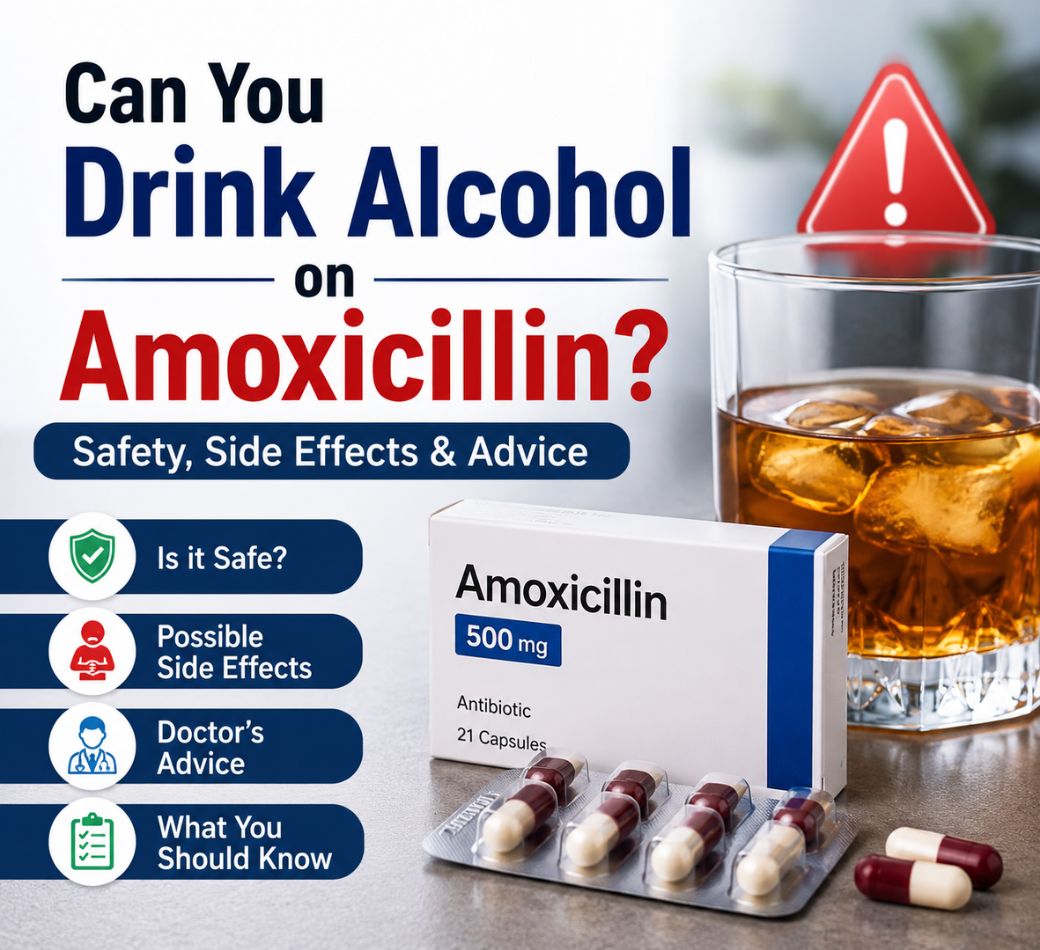
Many people ask the same question after receiving a prescription: Can you drink alcohol on amoxicillin? Whether you have a wedding, dinner party, vacation, or social event coming up, you may wonder if one drink could interfere with your treatment.
The short answer is that amoxicillin does not typically cause a dangerous chemical interaction with alcohol. However, alcohol can still affect your recovery, worsen side effects, and place additional stress on your body while it fights an infection.
In this guide, you’ll learn what happens when you combine alcohol and amoxicillin, when you should avoid drinking entirely, how long to wait after treatment, and which antibiotics carry serious alcohol warnings.
What Is Amoxicillin?
Most people will not experience a severe reaction. However, combining the two can increase common side effects.
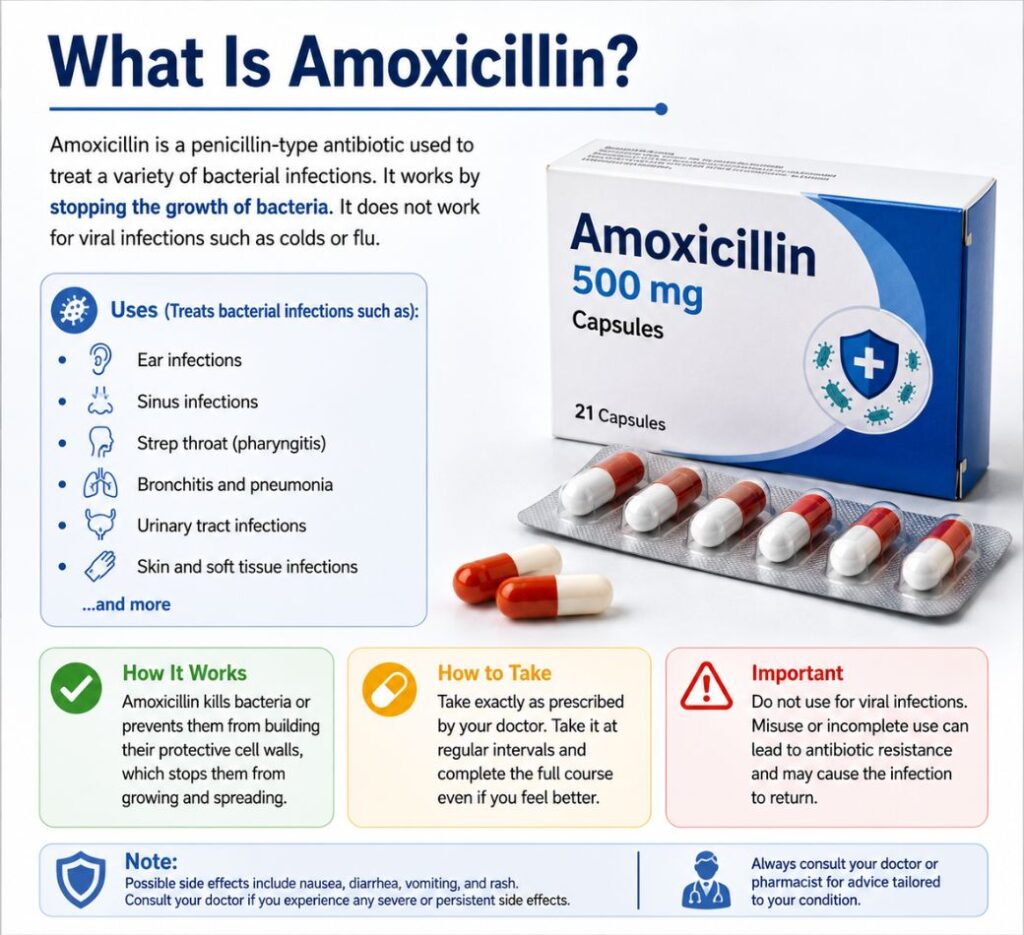
Amoxicillin belongs to the penicillin class of antibiotics. Doctors prescribe it to treat a wide range of bacterial infections, including:
- Ear infections
- Sinus infections
- Strep throat
- Pneumonia
- Skin infections
- Urinary tract infections
- Dental infections
Amoxicillin works by damaging bacterial cell walls, which helps your immune system eliminate the infection more effectively.
Can You Drink Alcohol on Amoxicillin?
In most cases, moderate alcohol consumption does not reduce the effectiveness of amoxicillin or create a dangerous drug interaction.
However, healthcare professionals generally recommend limiting or avoiding alcohol during treatment because alcohol can:
- Increase dehydration
- Disrupt sleep quality
- Delay recovery
- Aggravate stomach upset
- Weaken immune function
- Increase fatigue
Although one drink may not create a medical emergency, alcohol can make you feel worse while your body recovers from an infection.
The Short Answer
| Question | Answer |
|---|---|
| Does alcohol stop amoxicillin from working? | No |
| Does amoxicillin cause a severe alcohol reaction? | No |
| Can alcohol worsen side effects? | Yes |
| Can alcohol slow recovery? | Yes |
| Should you avoid alcohol while sick? | Ideally, yes |
Does Alcohol Make Antibiotics Less Effective?
Many people believe alcohol completely cancels out antibiotics. That belief is largely a myth when it comes to amoxicillin.
Alcohol does not directly prevent amoxicillin from killing bacteria. However, alcohol can create conditions that make recovery more difficult.
Alcohol May Affect Recovery By:
Increasing Dehydration
Alcohol acts as a diuretic. It increases fluid loss and may worsen dehydration caused by fever, vomiting, or diarrhea.
Disrupting Sleep
Your body performs many repair and immune functions during sleep. Alcohol often reduces sleep quality even when it helps you fall asleep faster.
Reducing Immune Performance
Research shows that excessive alcohol intake can impair several immune system functions, making it harder for your body to fight infection.
Irritating the Gut
Both alcohol and antibiotics can irritate the digestive system. Combining them may increase nausea, bloating, stomach pain, or diarrhea.
Side Effects of Mixing Amoxicillin and Alcohol

Potential Side Effects
| Side Effect | Amoxicillin | Alcohol | Combined Risk |
| Nausea | Yes | Yes | Higher |
| Vomiting | Possible | Possible | Higher |
| Diarrhea | Yes | Possible | Higher |
| Dizziness | Possible | Yes | Higher |
| Headache | Possible | Yes | Higher |
| Fatigue | Possible | Yes | Higher |
| Dehydration | Rare | Common | Higher |
If you already feel unwell from an infection, alcohol may amplify these symptoms.
Pharmacist’s Perspective: The Science of Recovery
Many articles focus only on whether alcohol chemically reacts with amoxicillin. Healthcare professionals often focus on a broader question:
Will alcohol make recovery harder?
Mechanism of Action Comparison
| Amoxicillin | Alcohol |
| Targets bacteria | Affects multiple organs |
| Supports infection treatment | Can impair recovery processes |
| Helps eliminate infection | Can increase dehydration |
| Works with immune defenses | May weaken immune response |
| Generally well tolerated | Can irritate the digestive system |
Liver Metabolism and Recovery
Unlike some antibiotics, amoxicillin does not rely heavily on liver metabolism. Therefore, alcohol does not usually create a dangerous liver-related interaction.
However, your body still processes alcohol while fighting infection. That additional workload may contribute to fatigue and slower recovery.
Gut Microbiome Effects
Amoxicillin can temporarily alter the gut microbiome. Alcohol can also disrupt healthy gut bacteria and irritate the intestinal lining.
When you combine the two, some people experience:
- Increased diarrhea
- Stomach discomfort
- Bloating
- Digestive upset
Can I Have One Glass of Wine on Antibiotics?

Many patients ask:
“Can I have one glass of wine on antibiotics?”
If you’re taking amoxicillin, one standard drink will not typically create a dangerous interaction.
However, you should avoid alcohol if:
- You have a fever
- You feel dehydrated
- You experience nausea
- You have vomiting or diarrhea
- You feel extremely fatigued
- Your doctor advised you not to drink
Your overall health matters more than the medication alone.
What Is Amoxicillin?
If you accidentally consumed alcohol while taking amoxicillin, don’t panic.
Most people experience no serious complications.
Monitor Yourself For:
- Increased dizziness
- Stomach upset
- Nausea
- Vomiting
- Diarrhea
- Dehydration
Continue taking your antibiotic exactly as prescribed unless your healthcare provider instructs otherwise.
Seek medical attention if severe symptoms develop.
The “Red Flag” vs. “Caution” List
Not all antibiotics behave the same way around alcohol.
Antibiotics With Serious Alcohol Warnings
| Antibiotic | Alcohol Risk Level | Recommendation |
| Metronidazole | High | Avoid completely |
| Tinidazole | High | Avoid completely |
| Secnidazole | High | Avoid completely |
| Cefotetan | Moderate to High | Avoid alcohol |
| Cefoperazone | Moderate to High | Avoid alcohol |
Antibiotics Like Amoxicillin
| Antibiotic | Alcohol Risk Level | Recommendation |
| Amoxicillin | Low | Limit alcohol |
| Penicillin VK | Low | Limit alcohol |
| Cephalexin | Low | Use caution |
| Azithromycin | Low to Moderate | Limit alcohol |
| Doxycycline | Moderate | Best avoided during treatment |
Understanding the Disulfiram-Like Reaction
Some antibiotics can trigger a disulfiram-like reaction, which may cause:
- Flushing
- Rapid heartbeat
- Severe nausea
- Vomiting
- Headache
- Low blood pressure
Amoxicillin does not typically cause this reaction.
How Long Should You Wait to Drink After Amoxicillin?
Most healthcare professionals recommend waiting until:
- You complete the antibiotic course
- Your symptoms improve
- You feel fully hydrated
- You regain normal energy levels
General Guideline
| Situation | Recommendation |
| Mild infection | Wait until symptoms improve |
| Significant illness | Wait until recovery |
| Persistent side effects | Avoid alcohol |
| Finished treatment | Usually safe to resume moderate drinking |
Many patients can safely consume alcohol after completing treatment and recovering from the underlying infection.
Real-World Scenario Analysis
Scenario 1: I Went to a Wedding While Taking Amoxicillin
One or two drinks may not cause a serious issue. Focus on hydration and monitor for worsening side effects.
Scenario 2: I Accidentally Drank a Beer
Continue your medication as prescribed. Watch for nausea, dizziness, or stomach upset.
Scenario 3: I Feel Sick and Want a Drink to Relax
Avoid alcohol. Rest, hydration, and sleep will support recovery far more effectively.
Scenario 4: I Take Metronidazole Instead of Amoxicillin
Do not drink alcohol. Contact your healthcare provider if you accidentally consume alcohol while taking this medication.
Signs of an Alcohol-Antibiotic Reaction
Seek medical attention if you experience:
- Severe vomiting
- Difficulty breathing
- Rapid heartbeat
- Chest pain
- Severe dizziness
- Fainting
- Allergic reaction symptoms
- Swelling of the face or throat
These symptoms require prompt evaluation.
Frequently Asked Questions
Can you drink alcohol on amoxicillin?
Moderate alcohol usually does not create a dangerous interaction with amoxicillin, but healthcare professionals recommend limiting alcohol during recovery.
Does alcohol make amoxicillin less effective?
Alcohol does not directly reduce amoxicillin’s antibacterial activity, but it may slow recovery by affecting sleep, hydration, and immune function.
Can I have one glass of wine while taking amoxicillin?
One glass of wine will not usually cause a serious interaction. However, avoid alcohol if you feel ill, dehydrated, or experience medication side effects.
What happens if I accidentally drank alcohol on antibiotics?
Most people taking amoxicillin experience no serious problems. Monitor for nausea, dizziness, stomach upset, or dehydration.
Which antibiotics should never mix with alcohol?
Metronidazole, tinidazole, and several related antibiotics can cause severe reactions and require complete alcohol avoidance.
How long after amoxicillin can I drink alcohol?
Most people can resume moderate drinking after finishing treatment and recovering from their infection.
Conclusion
So, can you drink alcohol on amoxicillin?
For most people, moderate alcohol consumption does not create a dangerous interaction or prevent amoxicillin from working. However, alcohol can increase dehydration, worsen side effects, disrupt sleep, and slow your body’s recovery process.
About the Medical Reviewer
Dr. Sarah Mitchell, PharmD
Medical Reviewer & Health Content Lead
Dr. Sarah Mitchell is a board-certified pharmacist with over 15 years of experience in clinical pharmacology and medication therapy management. She spent more than 10 years working in both hospital and community pharmacy settings, where she helped patients understand medication safety, drug interactions, and treatment adherence. Dr. Mitchell specializes in drug-drug interaction analysis, antimicrobial stewardship, and patient medication counseling.
She is a member of the American Pharmacists Association (APhA) and regularly contributes evidence-based health content for leading medical and healthcare publications. Through her work, Dr. Mitchell helps patients and readers make informed decisions by translating complex pharmaceutical research into clear, practical guidance.
Her goal is to provide accurate, trustworthy, and easy-to-understand medication information that supports safer healthcare decisions and improved patient outcomes.
LinkedIn: https://www.linkedin.com/in/sarah-mitchell-pharmd
Professional Profile: https://www.sarahmitchellpharmd.com
Medical Disclaimer: This article provides informational content only and does not replace professional medical advice, diagnosis, or treatment. Always consult your physician, pharmacist, or qualified healthcare provider regarding medications, alcohol use, and medical conditions.