

Ramadan fasting requires Muslims to avoid food and drink from dawn until sunset. This rule means you cannot drink water during the daylight fasting period, but you can drink water between Iftar and Suhoor.
The Qur’an explains that Muslims may eat and drink during the night until dawn and then complete the fast until sunset.
Understanding the exact fasting window can help you avoid accidental mistakes while maintaining proper hydration throughout Ramadan.
Can You Drink Water During Ramadan?
You cannot drink water while you observe the Ramadan fast from dawn until sunset. You can drink water during the non-fasting hours between Iftar and the start of the next fast.
The Qur’an states that Muslims can eat and drink until dawn and must then complete the fast until sunset.
This creates two clear hydration periods:
| Time | Can You Drink Water? | What It Means |
|---|---|---|
| Before Fajr | Yes | You can drink water during Suhoor until the fasting time begins |
| From Fajr to sunset | No | You must avoid food and drinks while fasting |
| At Maghrib/Iftar | Yes | You can break your fast and drink water |
| Between Iftar and Suhoor | Yes | You can drink fluids and eat normally |
Your local prayer timetable determines the exact beginning and end of your fast. Because Fajr and Maghrib times change by location and date, check a reliable local timetable rather than relying on a fixed clock time.
When Can You Drink Water During Ramadan?
You can drink water during Suhoor, Iftar, and the period between them.
Drinking Water During Suhoor
Suhoor gives you an opportunity to drink fluids before the fast begins. Instead of drinking an excessive amount at the last minute, spread your fluid intake across the evening and early morning.
You can also include foods with high water content, such as vegetables, fruit, soups, and salads.
The World Health Organization recommends drinking plenty of water between Iftar and Suhoor and choosing hydrating foods during Ramadan.
Drinking Water at Iftar
You can drink water as soon as you break your fast at sunset.
Many people begin Iftar with dates and water before eating their main meal. You can then continue drinking fluids throughout the evening.
Avoid trying to compensate for the entire day’s fluid loss by drinking an unnecessarily large amount in a short period. Your body absorbs fluids over time, so a steady intake can make hydration easier.
Drinking Water Between Iftar and Suhoor
Use the entire non-fasting period to replace the fluids you lose during the day.
A practical approach involves:
- Drink water when you break your fast.
- Drink fluids with or after your evening meal.
- Continue drinking water during the evening.
- Drink water during Suhoor.
- Increase your fluid intake when heat, exercise, or sweating increases your losses.
WHO guidance also recommends hydrating foods such as soup, watermelon, and green salad during Ramadan.
Does Drinking Water Break Your Fast in Ramadan?
Yes. Deliberately drinking water during the fasting period breaks the fast.
Islamic fasting prohibits drinking from dawn until sunset. Therefore, intentionally drinking a glass of water during daylight hours does not count as continuing the fast.
However, Islamic rulings distinguish between deliberate drinking, forgetting, and accidental ingestion. The details can also vary between schools of Islamic jurisprudence.
What If You Accidentally Drink Water While Fasting?
If you forget that you are fasting and drink water, an authentic hadith in Sahih al-Bukhari instructs the person to complete the fast. The hadith explains that Allah provided the food or drink.
Therefore, if you genuinely forgot that you were fasting, you should stop drinking as soon as you remember and continue your fast.
Do not intentionally continue drinking after you remember the fast.
What If Water Enters Your Mouth Accidentally?
Different situations can produce different rulings.
For example, water can enter the mouth during Wudu, bathing, swimming, or rinsing. Scholars discuss these cases according to factors such as intention, awareness, and whether the person deliberately caused the water to enter.
Some scholarly sources state that water entering the throat unintentionally during ordinary mouth or nose rinsing does not invalidate the fast, while Hanafi sources can distinguish between genuine accident and forgetfulness.
Because the details can differ by madhhab, follow the ruling of the qualified scholar or school of jurisprudence that you normally follow.
Can You Rinse Your Mouth With Water During Ramadan?
Yes, you can rinse your mouth while fasting, but you should avoid deliberately swallowing the water.
Muslims commonly rinse their mouths as part of Wudu. Islamic guidance allows mouth rinsing during fasting while warning against excessive rinsing that could cause water to enter the throat.
How Should You Rinse Your Mouth During Wudu While Fasting?
Follow these simple precautions:
- Use a small amount of water.
- Rinse your mouth normally.
- Avoid excessive gargling.
- Spit the water out completely.
- Avoid intentionally swallowing residual water.
You do not need to create unnecessary difficulty by repeatedly spitting or worrying about ordinary mouth moisture.
Can You Gargle During Ramadan?
You can rinse your mouth, but avoid unnecessary deep gargling while you fast.
Gargling pushes water farther into the mouth and throat and can increase the chance of accidental swallowing. Islamic guidance specifically cautions fasting people against excessive rinsing.
If you need to rinse your mouth for hygiene, keep the process gentle and spit the water out.
Can You Brush Your Teeth While Fasting?
You can brush your teeth while fasting, but you must avoid swallowing toothpaste, foam, or water.
A practical routine includes:
- Use a small amount of toothpaste.
- Brush carefully.
- Spit out the foam.
- Rinse gently if needed.
- Make sure you do not intentionally swallow the rinse water.
If you have concerns about a specific toothpaste, mouthwash, or dental treatment, ask a qualified Islamic scholar about the ruling that applies to your madhhab.
Can You Drink Water After the Fajr Adhan?
The key point involves the actual beginning of dawn, not simply the sound of a particular person’s call to prayer.
The Qur’an permits eating and drinking until dawn and then instructs Muslims to complete the fast until sunset.
Therefore, follow the reliable Fajr time for your location.
If a mosque’s Adhan occurs according to the established local Fajr time, you should stop eating and drinking when the fast begins.
Because prayer timetables and local practices can differ, check your local Ramadan timetable if you feel unsure about the exact cutoff.
How Much Water Should You Drink Between Iftar and Suhoor?
Your fluid needs vary according to factors such as body size, activity, weather, sweating, diet, and health conditions.
Instead of forcing yourself to follow one universal number, spread your fluid intake across the non-fasting period.
WHO Ramadan guidance recommends plenty of water and specifically gives at least 10 glasses as a general example, while also recommending hydrating foods. Individual needs can differ, especially in hot climates or during physical activity.
A Simple Ramadan Hydration Schedule
| Period | Hydration Approach |
|---|---|
| Iftar | Start with water when you break the fast |
| After Iftar | Continue drinking water with and between meals |
| Evening | Drink regularly rather than consuming a very large amount at once |
| Before Bed | Drink according to thirst and your normal needs |
| Suhoor | Drink water before the fast begins |
| Daylight | Avoid drinking while you observe the fast |
You can adjust this schedule based on your thirst, urine output, climate, activity level, and medical needs.
Ramadan Hydration Tips
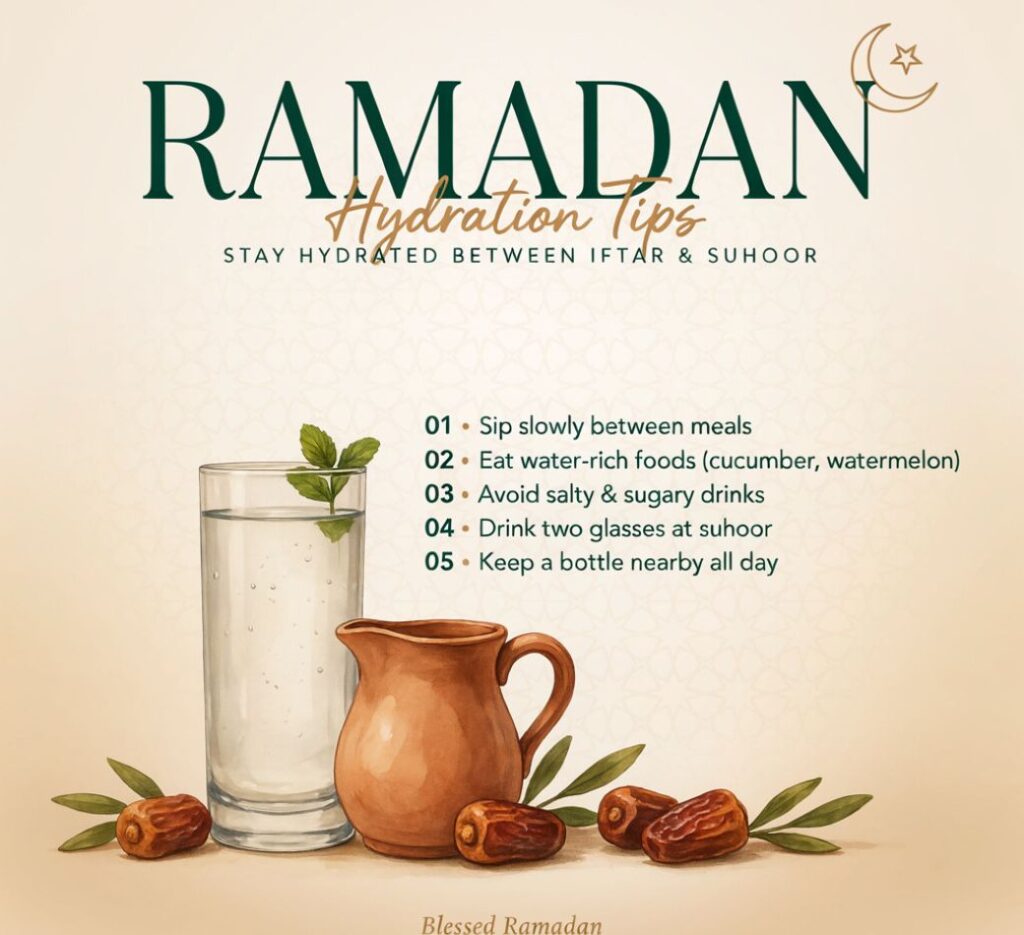
Good hydration starts before the fasting period begins. Use these practical strategies to make your fast more comfortable.
1. Drink Regularly Between Iftar and Suhoor
Do not wait until the final few minutes before Fajr to drink all your water.
Spread your intake across the evening and Suhoor period.
2. Eat Hydrating Foods
Foods such as watermelon, cucumber, tomatoes, soups, and salads can contribute to your overall fluid intake.
WHO also recommends hydrating foods during Ramadan.
3. Limit Excessive Caffeine
Coffee, tea, cola, and other caffeinated drinks can contribute to frequent urination in some people. WHO recommends limiting caffeinated drinks during Ramadan.
You do not need to eliminate caffeine automatically, but you should consider how it affects your hydration and sleep.
4. Reduce Excessively Salty Foods
Very salty meals can increase thirst and make the fasting day feel more difficult.
Choose balanced meals that include vegetables, whole grains, protein, and moderate amounts of salt.
5. Adjust for Hot Weather
Heat increases fluid loss through sweating.
WHO recommends avoiding excessive sun exposure and staying in cool or shaded areas when temperatures rise.
6. Consider Your Activity Level
Exercise and physically demanding work can increase your fluid requirements.
If you work outdoors or exercise intensely, plan your activity and hydration carefully during the non-fasting hours.
What Happens If You Become Dehydrated During Ramadan?
Fasting naturally reduces fluid intake during daylight hours, and some people may experience dehydration, especially in hot weather or during physically demanding activities.
Watch for symptoms such as:
- Strong thirst
- Very dark urine
- Reduced urination
- Dizziness
- Weakness
- Headache
- Dry mouth
- Unusual fatigue
Severe dehydration can become a medical emergency.
If you develop serious symptoms, seek medical attention rather than trying to continue fasting at the expense of your health. WHO advises people with illnesses or health risks to seek medical advice about fasting.
Can You Drink Water During Ramadan for Medical Reasons?
Islam provides concessions for people who are ill or traveling. The Qur’an specifically discusses illness and travel in connection with Ramadan fasting and allows people to make up missed fasts later.
If fasting creates a significant medical risk for you, speak with your doctor before Ramadan and consult a qualified Islamic scholar about the religious ruling that applies to your circumstances.
People with diabetes, kidney disease, pregnancy, breastfeeding, or other medical conditions may need individualized advice. WHO specifically recommends individual medical guidance for people with conditions such as diabetes and hypertension.
Do not rely on a general internet rule when your health condition requires individualized care.
What About Electrolytes During Ramadan?
Electrolytes such as sodium and potassium help regulate fluid balance and normal body functions.
Most healthy people can obtain electrolytes through a balanced diet. You do not automatically need electrolyte supplements simply because you fast.
You may need medical guidance if you experience heavy sweating, vomiting, diarrhea, or another condition that causes substantial fluid and electrolyte loss.
Avoid treating electrolyte drinks as a replacement for medical care when you experience severe dehydration.
Can Non-Muslims Drink Water Around Fasting Muslims?
Yes. Non-Muslims do not need to fast simply because Muslims around them observe Ramadan.
People can drink water according to their own needs.
However, workplaces, schools, restaurants, and public spaces may follow local customs or policies during Ramadan. Respectful behavior can help everyone feel comfortable, especially in communities where many people fast.
Ramadan Water Rules: Quick Reference
| Situation | General Guidance |
|---|---|
| Drinking water before Fajr | Allowed |
| Drinking water after Iftar | Allowed |
| Drinking water between Iftar and Suhoor | Allowed |
| Drinking water intentionally during the fast | Breaks the fast |
| Drinking because you forgot you were fasting | The cited hadith instructs you to complete the fast |
| Rinsing your mouth during Wudu | Permitted; avoid swallowing water |
| Excessive gargling while fasting | Avoid it |
| Water entering accidentally | Rulings can differ depending on circumstances and madhhab |
| Severe illness or dehydration | Seek medical advice and consult a qualified scholar about the fasting ruling |
Frequently Asked Questions
Can you drink water during Ramadan?
You can drink water between Iftar and Suhoor, but you cannot drink water during the daylight fasting period from dawn until sunset.
Does drinking water break your fast?
Intentionally drinking water during the fasting period breaks the fast. If you forget that you are fasting and drink, the hadith in Sahih al-Bukhari instructs you to complete your fast.
Can you drink water during Suhoor?
Yes. You can drink water during Suhoor until the fast begins at dawn.
Can you drink water after Iftar?
Yes. You can drink water throughout the non-fasting period after sunset.
What happens if you accidentally drink water while fasting?
The answer depends on what happened. If you genuinely forgot that you were fasting, the authentic hadith instructs you to complete your fast. If water entered accidentally during Wudu or another activity, different schools can apply different rulings.
Can you rinse your mouth during Ramadan?
Yes. You can rinse your mouth during fasting, including during Wudu. Avoid excessive rinsing and do not intentionally swallow the water.
Can you brush your teeth while fasting?
Yes. You can brush your teeth while fasting, but you should avoid swallowing toothpaste, foam, or rinse water.
How much water should you drink between Iftar and Suhoor?
Your needs vary. Spread your fluid intake across the non-fasting hours and include hydrating foods. WHO gives at least 10 glasses as a general Ramadan hydration recommendation, but individual needs can differ.
Can you drink water if you become severely dehydrated?
If you develop severe dehydration or another serious medical problem, prioritize medical safety and seek professional care. People with medical conditions should discuss fasting with their healthcare provider and consult a qualified Islamic scholar about their religious obligations.
Can you drink water immediately when Maghrib begins?
Yes. Once sunset begins and the fast ends, you can break your fast and drink water.
Conclusion
So, can you drink water during Ramadan? Yes, but only during the non-fasting hours if you observe the Ramadan fast.
You can drink water during Suhoor, at Iftar, and throughout the period between sunset and dawn. During the daylight fast, you must avoid drinking water.
Good hydration depends on more than drinking a large amount at Suhoor. Spread your fluids across the evening, eat hydrating foods, consider your activity and climate, and pay attention to signs of dehydration.
For questions involving accidental water ingestion, Wudu, medical conditions, or exemptions from fasting, remember that Islamic jurisprudence can differ between schools. Follow a qualified scholar for your specific madhhab and seek medical advice when your health requires individualized care.
Important author note: Add only a real author and reviewer biography to this article. Do not publish placeholder credentials such as “MD,” “RD,” “Islamic Nutrition Specialist,” or “Sheikh” unless the named person genuinely holds those qualifications.